
Approach to investigation management: studying national experience and the best standards

In the course of their work, investigators and prosecutors often face complex challenges: information is frequently incomplete, circumstances change rapidly, and in particularly difficult or high-profile cases, they must contend with public pressure and the high cost of errors.
Today, Ukrainian investigative authorities and prosecutors frequently handle complex cases that necessitate substantial resources and prolonged processes. In these conditions, it is easy to rely on intuition and get fixated on a single version, while overlooking alternatives. At the same time, it’s difficult to calculate and organize resources effectively to process different versions and conduct a successful investigation.
Complex, and large-scale investigations require a different approach to management. It’s not about a lone detective or investigator, but about structured teamwork built on clear procedures for interaction, critical thinking, and evidence-based decisions. This is the essence of Investigative Management.
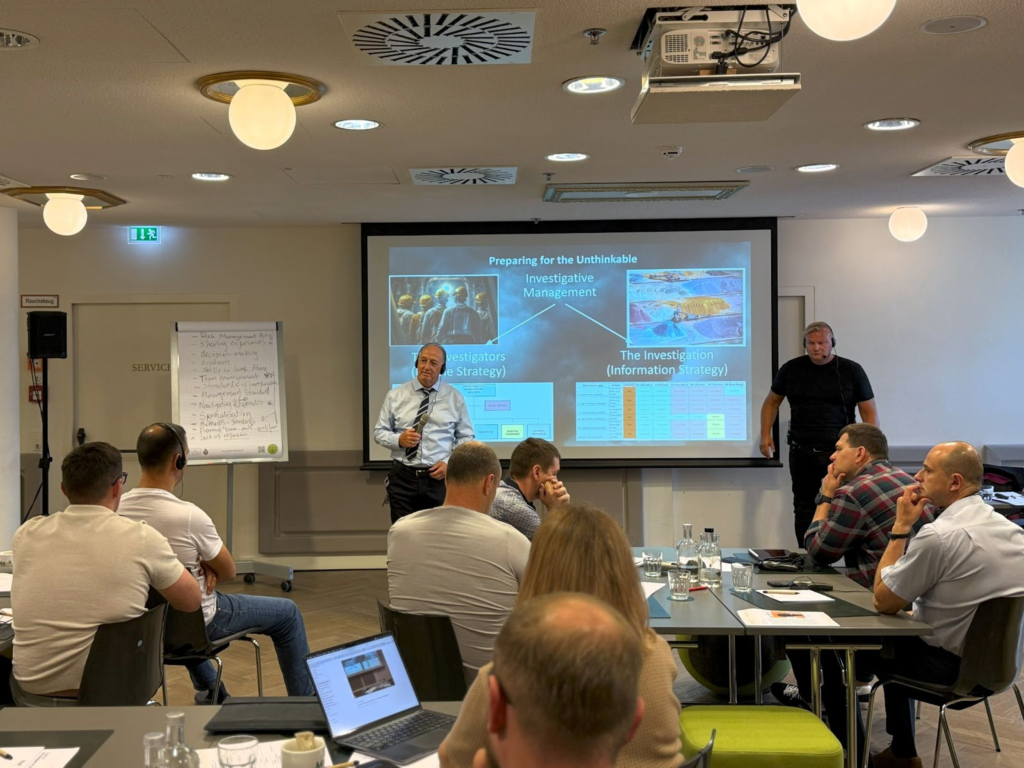
This approach has two key components:
- Disciplined thinking — avoiding cognitive pitfalls (tunnel vision, confirmation bias), systematically testing all hypotheses, documenting decisions, and making them transparent to the team, prosecutors, and the court.
- Organization of interdisciplinary teams — complex cases always require collaboration among various specialists: investigators, prosecutors, criminalists, experts, and operational units. Effective management involves creating a collaborative environment with clear role allocation, effective communication, and seamless coordination, ensuring that no critical detail is lost between different teams or agencies.
In early September 2025, JustGroup brought together leaders from various Ukrainian institutions — the Prosecutor General’s Office, NABU, the National Police, and the Security Service of Ukraine. They immersed themselves in modern European practices of investigative management with international experts:
- Tony Cook, Strategic Investigator from Great Britain, with extensive experience in investigating serious and major crimes, and more recently, Head of Child Sexual Abuse Operations.
- Dr. Ivar Fahsing, Chief Detective Inspector and Associate Professor at the Norwegian Police University, is one of the developers of international principles for investigative interviews. Dr. Fahsing also serves as an expert consultant at the NCHR.
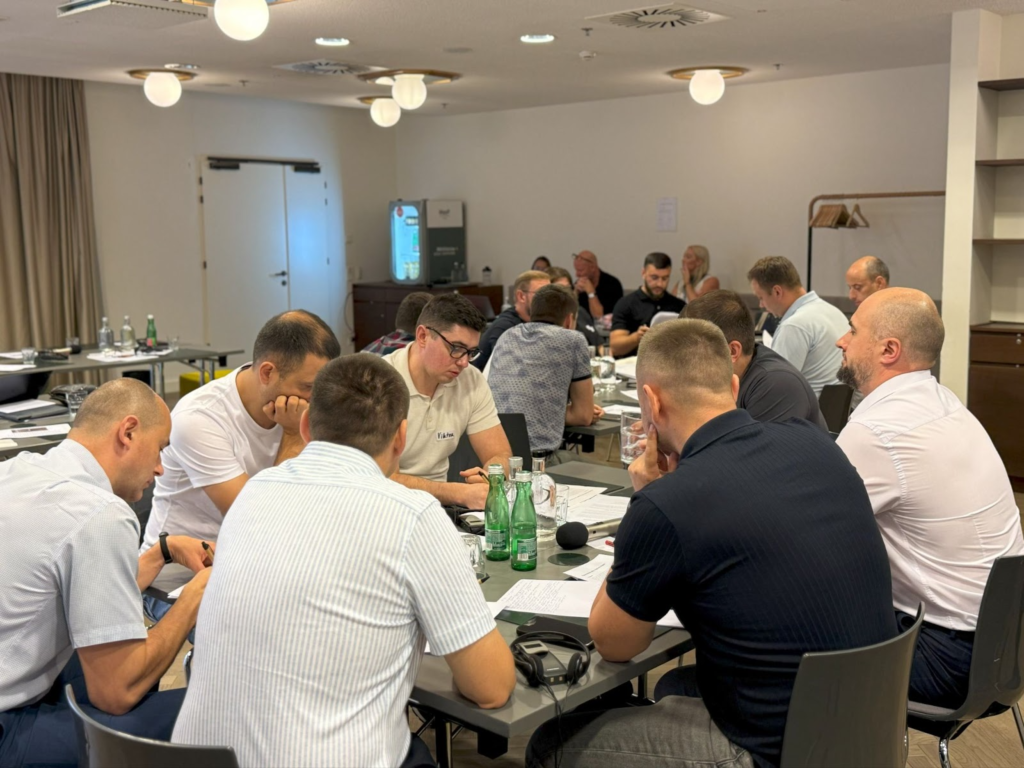
Under their guidance, participants analyzed real-life Ukrainian cases — from deprivation of liberty and torture during armed conflict to corruption crimes. They trained to “think like researchers”: generating different hypotheses, rigorously testing them, discarding weak ones, and keeping only those that withstand factual pressure. They also practiced team coordination in complex cases — learning how to structure teams effectively, set up communication between different agencies, and ensure a transparent allocation of tasks and joint decision-making.
“The workshop on investigation management became a platform for sharing not only international but also equally valuable national experience. After all, it is the Ukrainian context that is our foundation for building modern law enforcement agencies and synchronizing them. International experience gives us the opportunity to look at the investigation management system from a different perspective, analyze and compare approaches, and identify the advantages and disadvantages in each case. From the experience of our foreign colleagues, the most resonant management tools are those that, although not characteristic of our system, are actively used in the business environment, which proves their effectiveness. In particular, the use of multidisciplinary teams, the rejection of the command-and-control style as the only possible one, and the organization of teamwork and brainstorming on investigations”, said Denys Hiulmahomedov, First Deputy Director of NABU.
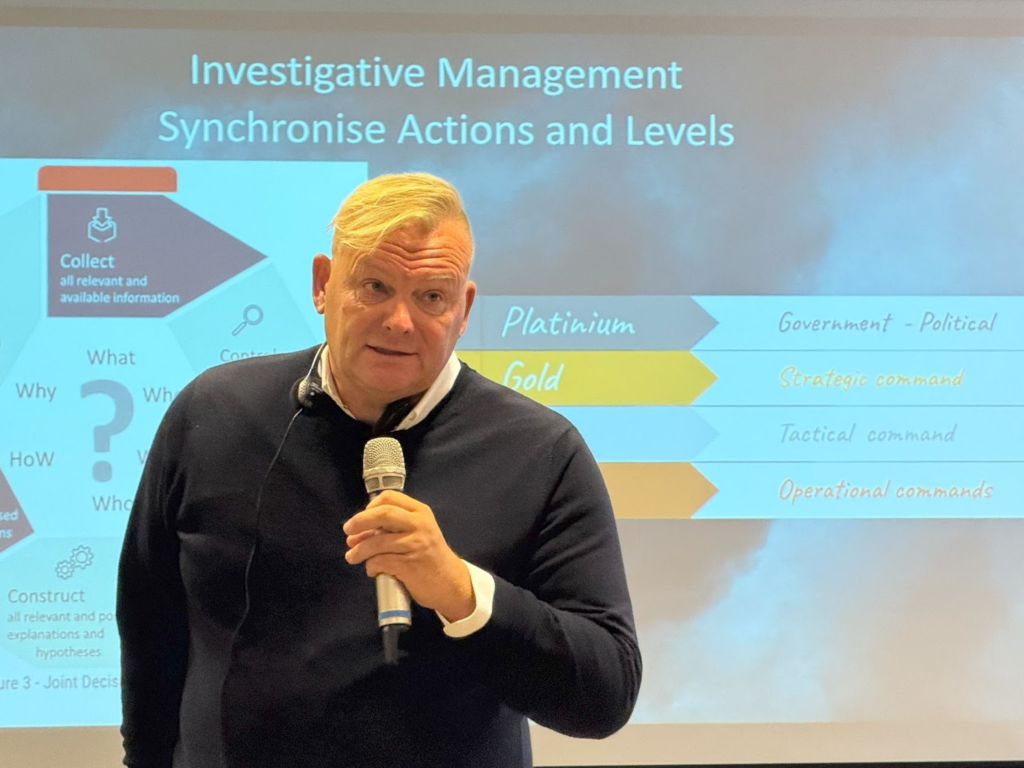
The training focused on key tools for investigative thinking:
- SCOPE — the steps of the critical analysis discipline (“search – construct – verify – review – evaluate”).
- ACH (Analysis of Competing Hypotheses) — a methodology that forces you to move beyond your own biases and see the bigger picture.
“The experience of our colleagues from the UK and Norway in organizing complex and large-scale investigations can now be used in the Ukrainian context during the investigation of numerous international crimes. The unprecedented workload on Ukrainian investigators and prosecutors forces us to look for new approaches and solutions to improve our efficiency, so the opportunity to discuss our findings with world-renowned experts is invaluable. It is gratifying that we are now speaking the same language, and they highly appreciate our work,” said Denys Lysenko, Head of the Unit in the PGO War Department.
This workshop was just the starting point. We will continue to work on the topic of investigative management, as it is the key to high-quality justice and the resilience of our system. Our next steps include:
- Analyzing Ukrainian cases and practices — to understand how investigations are currently organized, and to identify the system’s strengths and “blind spots.”
- Developing a framework of investigative management standards — to establish unified guidelines for investigators, prosecutors, and other involved institutions within the national context.
- Building a system of professional development for investigators and prosecutors in this field, including workshops, training programs, and mentorship.
The Investigative Management workshop was organized by JustGroup and the Norwegian Centre for Human Rights, with the financial support of the Nansen Support Programme for Ukraine, Norad.


