Standard-Bearers: How JustGroup Is Developing Ukraine’s Investigative Interviewing Trainer Community
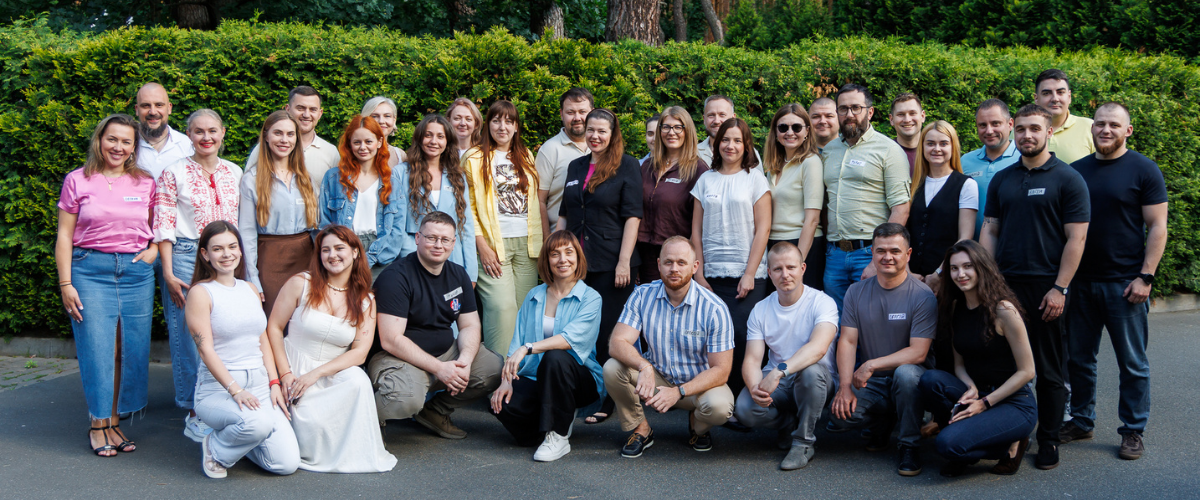
Over the past several years, investigative interviewing in Ukraine has evolved from a methodology unfamiliar to most practitioners into an approach that is gradually being integrated into the criminal justice system. Today, investigative interviewing is moving beyond individual development programmes and becoming the foundation for new educational initiatives, cooperation with state institutions, higher education establishments, and international partners.
As the field expands, so too does our responsibility. How do we ensure a shared understanding of the investigative interviewing standard? How do we maintain the high quality of development programmes? And how do we build a community of people capable not only of applying the approach in their own practice, but also of passing it on to others?
That is why JustGroup has launched a new phase in the development of the methodology — a programme for preparing new members of the national investigative interviewing trainer and expert team.

“For us, this is not just about training new trainers. It is about building a community of standard-bearers who will help ensure the quality, sustainability and further development of the procedural interview in Ukraine,” emphasises Vasylyna Yavorska, JustGroup CEO.
Joining the Trainer and Expert Community
Developing a community of investigative interviewing trainers requires not only motivated individuals but also clear rules, shared standards, and a transparent framework for professional growth. That is why we approached this task systematically and developed a Roadmap for the Development of the National Investigative Interviewing Trainer and Expert Team.
In this document, the authors — Vasylyna Yavorska, Anna Petrovska, and Viktoria Mryshuk — outline the process for joining the community, the stages of trainer development, quality criteria, and the principles of cooperation between trainers and the organisation responsible for providing the methodology and training materials.
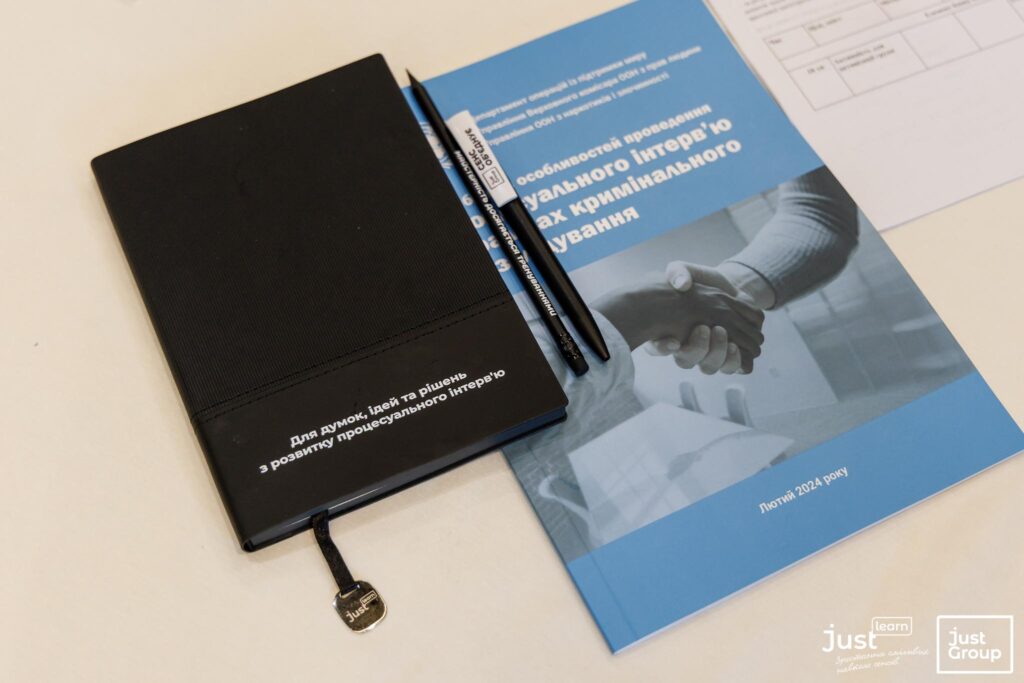
Both practitioners within the criminal justice system and members of the academic community who integrate investigative interviewing into their professional practice or the training of future specialists can become trainers. At the same time, professional experience and an understanding of the methodology are only part of the criteria. Equally important are a willingness to grow, openness to feedback, support for the values underpinning investigative interviewing, and a commitment to contributing to the professional community.
A mandatory prerequisite for joining the trainer pathway is successful completion of the “Investigative Interviewing. Basic” programme or another training programme on investigative interviewing that provides a solid understanding of the approach and its core values.
The first step on this journey was a three-day training programme for future investigative interviewing trainers, held on 19–21 June 2026. The event brought together experienced trainers and 16 graduates of JustLearn programmes. Participants included representatives of the Office of the Prosecutor General, the National Anti-Corruption Bureau of Ukraine, the State Bureau of Investigation, the National Police of Ukraine, the Bureau of Economic Security of Ukraine, the Security Service of Ukraine, as well as the SBU Institute of Yaroslav Mudryi National Law University and Odesa State University of Internal Affairs.
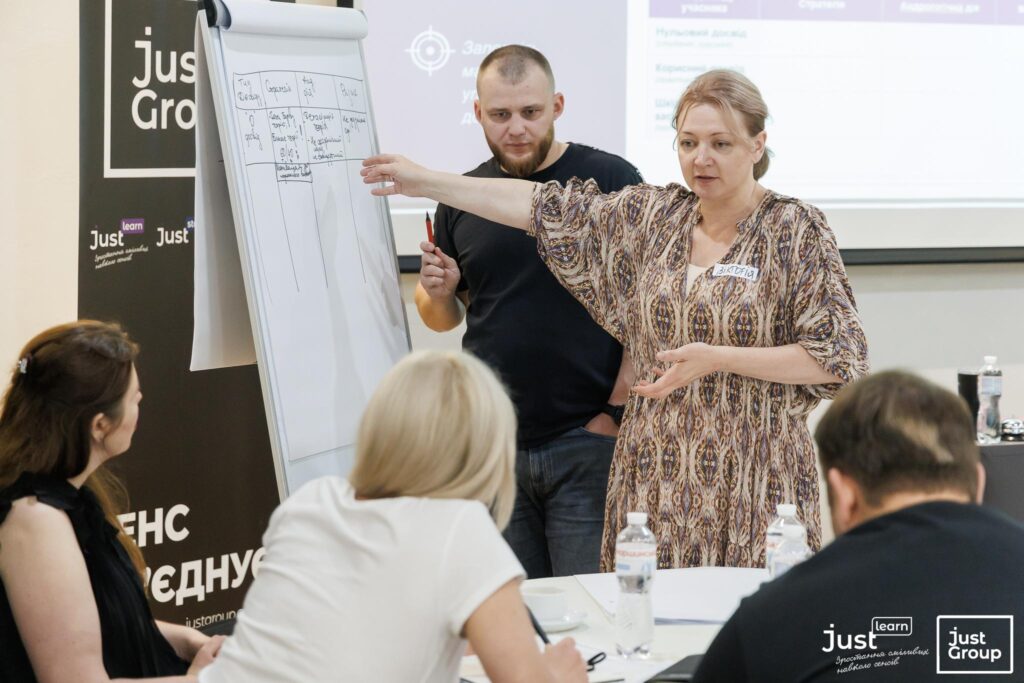
Viktoria Mryshuk, a mentor and facilitator of transformational sessions, co-designed participant engagement throughout the programme. She shared her coaching experience, revealing the specifics of a coach’s interaction with a diverse audience and the art of maintaining a safe space necessary for effective learning and development.
“The greatest risk when scaling a development programme is diluting the methodology and overestimating the role of training itself. That is why it was especially valuable for me to observe how, throughout the programme, the experienced trainers carefully preserved the core principles of the approach while also giving new trainers the space to improvise and develop their own style,” says Viktoriia Mryshuk. “Another important outcome of this programme was our shared understanding that scaling requires a systemic shift in stakeholders’ mindset and the development of a community of practitioners who are committed to embedding the standards of investigative interviewing into their everyday work.”
An equally important component of the programme was learning through interaction with experienced trainers. The members of the national trainer and expert team worked alongside participants as mentors and observers, providing individual feedback and helping them reflect on their own style of work, their role as trainers, and their responsibility for passing the standard on to others.
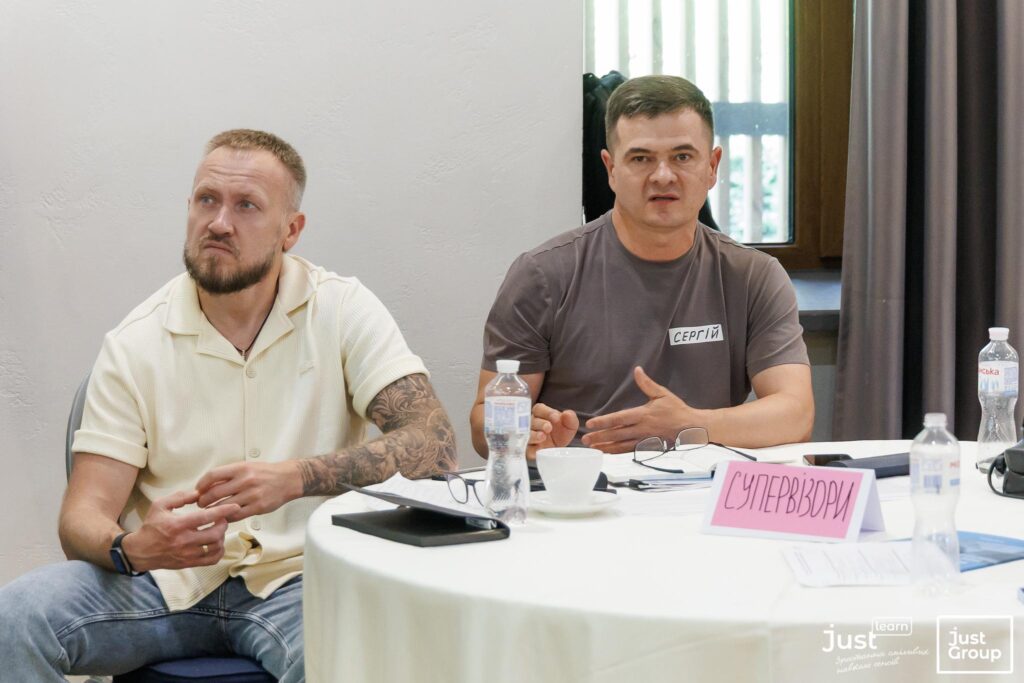
“The current trainer and expert community is a valuable but limited resource. If we want investigative interviewing to continue developing and scaling across Ukraine, the number of people capable of effectively passing on this approach must grow. We have been running these programmes since 2022 and can see that a new generation of professionals is ready to take on the trainer role. Our task today is to pass on the experience, knowledge, and values we have accumulated so that, together, we can continue developing this field and maintaining a high standard of training,” notes Volodymyr Vasylchuk, Senior Detective at NABU and member of the National Trainer and Expert Team.
Immersion in the Trainer Role and Certification
Upon completion of the ToT, participants will continue their development as co-trainers. They will work alongside experienced members of the national trainer and expert community, gradually taking responsibility for individual programme modules while receiving ongoing support and regular feedback.
Co-training is one of the key elements of the development pathway. It creates a safe environment for making mistakes, experimenting, and discovering one’s own style, while allowing trainer competencies to develop through real-life programme delivery.
It is important to us that future trainers not only know how to explain the methodology of investigative interviewing, but also demonstrate it in their own practice, understand the logic of programme design, and be able to facilitate changes in participants’ professional mindset.
Trainer certification is not the end of the journey, but the beginning of a new responsibility. After obtaining trainer status, development continues through programme delivery, feedback, updating training materials, participation in community meetings, and the exchange of practical experience.

“For me, this initiative is first and foremost about scaling the approach. And scaling always means change — in thinking, professional culture, and ultimately in the system itself. The opportunity to join the trainer community is an opportunity to pass knowledge on to others and expand the circle of people who share the values of investigative interviewing. I believe that changes in individuals and teams gradually lead to changes across the entire system. It is a long-term endeavour, but these are precisely the kinds of steps that can transform the criminal justice system,” says Yevhen Moskovka, senior investigator of the Main Investigation Department of the National Police in Donetsk Oblast.
Not just training, but setting a standard
Developing a trainer community is one of the key ways to advance investigative interviewing in Ukraine. Through high-quality development programmes, new professionals become familiar with the approach, while practitioners gain opportunities to strengthen their skills and rethink their professional role.
At the same time, we understand that training trainers is only one component of systemic change. That is why JustGroup continues to work with higher education institutions, supports the development of academic courses, conducts research, contributes to national standard development, and creates spaces for professional exchange and community support.
For us, investigative interviewing is more than a methodology for conducting interviews. It is a professional culture that requires people, knowledge, institutional support, and time. We are pleased to see a community taking shape in Ukraine that is ready to take responsibility for its development, one step at a time.

The development programme was designed and implemented by the JustLearn Development Hub of JustGroup NGO with the support of the Norwegian Centre for Human Rights (University of Oslo).
Photo: Anna Putilina