Investigative Interviewing in Ukraine: Shared Experience with Norway and Steps Towards a Standard

The long-standing cooperation between JustGroup and the Norwegian Centre for Human Rights at the University of Oslo in promoting investigative interviewing in Ukraine is yielding tangible results. Today, this methodology is no longer something abstract, as it may have seemed just a few years ago. It is increasingly recognised by key institutions within the criminal justice system, while higher education institutions are introducing dedicated courses on its principles and application.
At the same time, it will take more time for investigative interviewing to become a system-wide standard. It is already important to reflect on the path taken, define the next steps, and move forward with a clear sense of direction. Such a space for reflection emerged during the Norwegian delegation’s visit to Ukraine from 13–17 April 2026.

“This visit clearly highlighted a number of polarities we deal with daily but rarely articulate explicitly. These include, in particular, the balance between drawing on international experience and adapting it to the Ukrainian context; between ensuring the speed of change and its sustainability; and between building formal structures and solutions and fostering trust between people,” says Vasylyna Yavorska, Head of JustGroup. “This is not an either-or choice. These are tensions that need to be held and worked through in the context of systemic change. And this is precisely where the value of partnership becomes evident — as a space where different perspectives come together into a more holistic vision, without simplification.”
Institutional meetings: how practice is evolving
As part of the visit, JustGroup organised a series of meetings with key law enforcement institutions that are jointly implementing investigative interviewing. These meetings provided an opportunity to observe how the approach works across different institutions, levels, and contexts — from anti-corruption investigations to war crimes cases and the training of future investigators.
Each of these institutions plays a role in shaping a new investigative culture in Ukraine.

Cooperation with the Office of the Prosecutor General, particularly its War Crimes Department, has made it possible to adapt the methodology to the investigation of international crimes. Together, we have implemented a number of development programmes for juvenile prosecutors and prosecutors working with victims and witnesses of war crimes. In parallel, work is underway to develop a child interviewing protocol.
The National Anti-Corruption Bureau of Ukraine was the first institution to pilot the methodology. Today, its detectives form an essential part of the expert-trainer community and actively transfer this approach to other institutions.
One of the key focuses is on integrating investigative interviewing into the training system for future police officers. In cooperation with the National Police of Ukraine, the methodology is gradually being incorporated into curricula for cadets in higher education institutions of the Ministry of Internal Affairs system.

The Economic Security Bureau of Ukraine is currently transforming, with a new institutional culture being shaped. The investigative interviewing approach is organically integrated into these changes, as it is grounded in the same values — analytical thinking, impartiality, and respect for human rights.
Public lecture: changing the logic of investigation
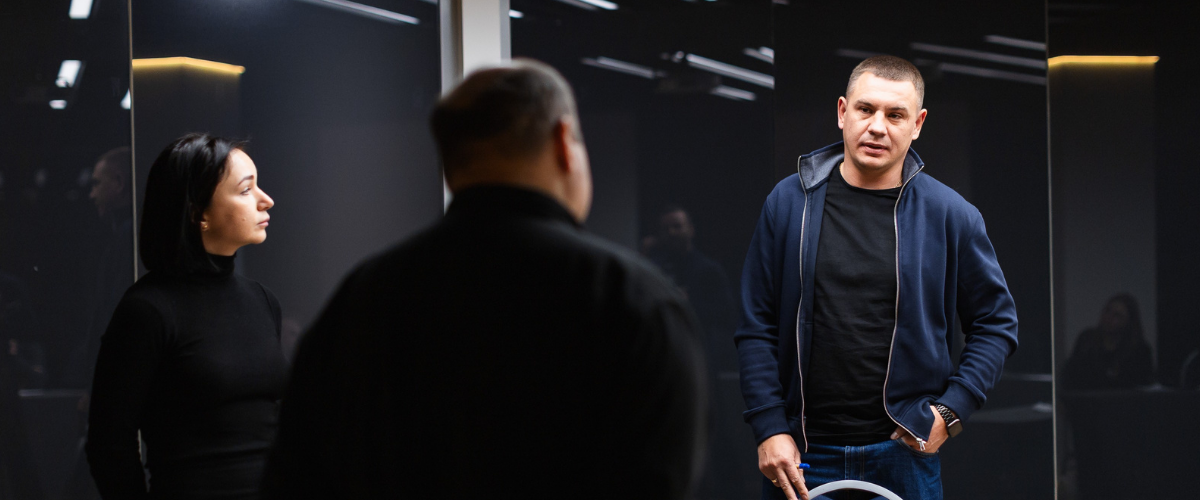
The key event of the visit was a public lecture by Asbjørn Rachlew, PhD, Senior Police Officer in Norway, international expert in investigative interviewing, and member of the European Committee for the Prevention of Torture (CPT).

The lecture took place on 14 April at the National Academy of Internal Affairs and brought together practitioners, academics, and students. Asbjørn Rachlew spoke about a paradigm shift in investigation — from a confession-oriented model to an approach focused on obtaining reliable information, grounded in science and respect for human rights.
“Investigative interviewing is not just a tool. It is a paradigm shift in investigation that entails many other changes. Human rights are not in opposition to effectiveness — they are what enable it,” he emphasised.

In his lecture, he also highlighted that key causes of miscarriages of justice include false confessions and systemic biases that lead to ignoring alternative hypotheses. Addressing these challenges requires a shift in investigative culture and the adoption of investigative interviewing as a standard.
Workshop for practitioners: methodology and technology
Investigative interviewing itself is aimed at improving the quality of investigations. At the same time, modern technologies open up additional opportunities: they enhance the quality of interviews, improve documentation, and help use resources more efficiently.

The synergy between the methodology and digital tools was discussed during a workshop for practitioners involved in its implementation in Ukrainian institutions. Particular attention was given to the design of interview rooms, ensuring proper recording, and the role of video recording as a tool for improving quality.
Research shows that video recording captures context and non-verbal cues that are critical for assessing information, while also encouraging professional conduct among all participants in the process.

The workshop featured contributions from:
- Asbjørn Rachlew — PhD, Senior Police Officer (Norway), CPT member
- Xander Radpey — Superintendent in the Norwegian police, expert in technological solutions for interviewing and documentation
- Bjørge Hansen — CEO of Davidhorn, expert in technologies and analytical tools for investigations

An additional element of the programme was a visit to the headquarters of the investigation into war crimes committed by the armed forces of the aggressor state during the occupation of Bucha, Kyiv region. The Head of the unit, prosecutor Oleksandr Kleshchenko, and Deputy Head of the War Crimes Department of the Office of the Prosecutor General, Anna Sosonska, presented documented cases of brutal killings, torture, and other forms of violence against civilians, as well as the current state of these investigations. In this context, particular attention was given to the role of investigative interviewing in working with victims and witnesses of such crimes.
At the same time, Norwegian colleagues — Xander Radpey, as well as Oddvar Moldestad and Kjeld Hendrik Helland-Hansen (who joined online) — presented modern technological solutions used by the Norwegian police to enhance interviewing and documentation processes.
A partnership that grows into friendship
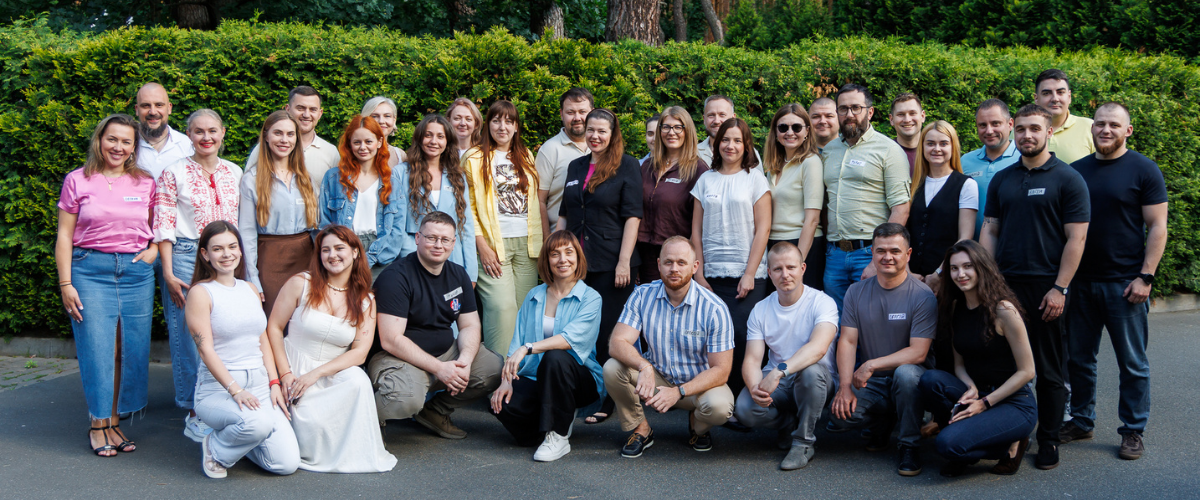
For us, this cooperation is not only about partnership but also about friendship. We deeply appreciate the support of the Kingdom of Norway, and especially our colleagues from the Norwegian Centre for Human Rights — Gísle Kvanvig, Susanne Hendrika Flølo, and Katarina Lavrinenko Friis-Olsen, who visited Kyiv this time, as well as Knut Asplund and Sigrid Buseth, whose support we feel even at a distance.
During wartime, the visit of Norwegian partners to Ukraine is a conscious choice to stand together. It was important for us not only to work together but also to introduce our partners to Kyiv — its history and symbols: the Golden Gate, Saint Sophia Cathedral, and St. Michael’s Monastery. Together, we visited the memorial in Bucha and reflected on the centuries-old connections between our countries in Vytachiv.

This visit once again confirmed that change in the criminal justice system is about people, trust, and joint effort. And step by step, investigative interviewing is becoming part of a new investigative culture in Ukraine.