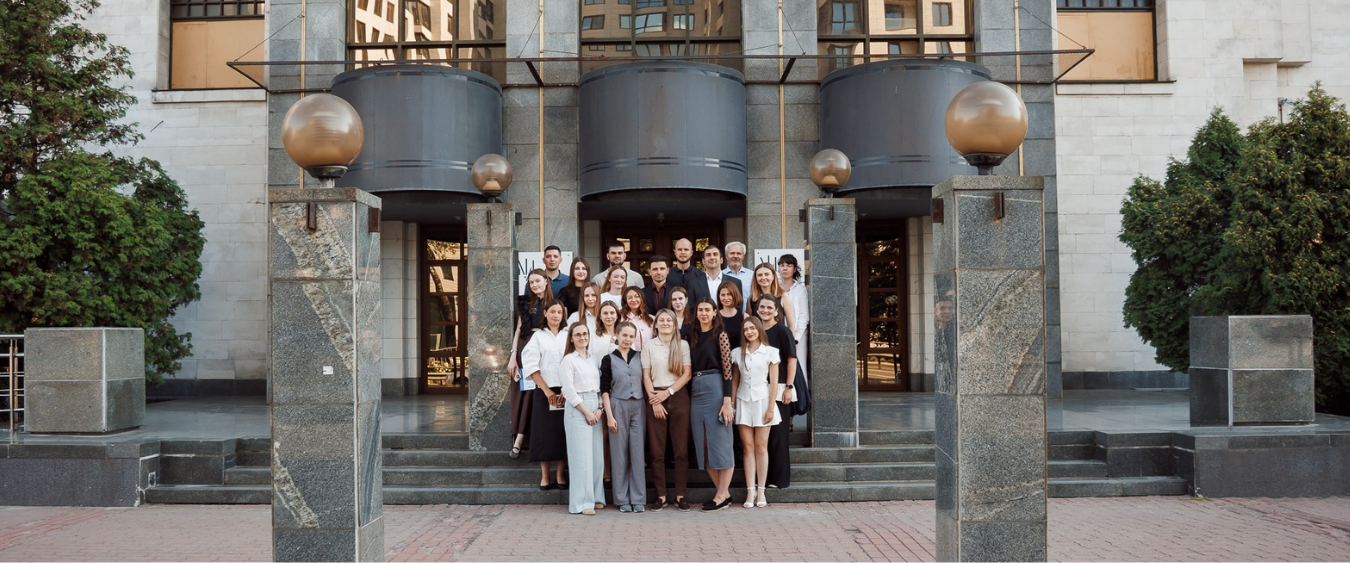
Rule of Law. Rule for All: How the Criminal Justice Summer School 2026 Unfolded
Future legal professionals begin shaping their understanding of what criminal justice should look like — and what their own role in it may be — while they are still studying. That is why we need to work with students at this stage: to create a space where they can see law as something broader than legal provisions, ask difficult questions, work with arguments, and learn to make professional decisions responsibly.
For the third year in a row, the Criminal Justice Summer School (2024, 2025) has become exactly such a space. Each year, it brings together a new group of students around topics that help them develop a deeper understanding of criminal justice and explore it through real professional challenges.
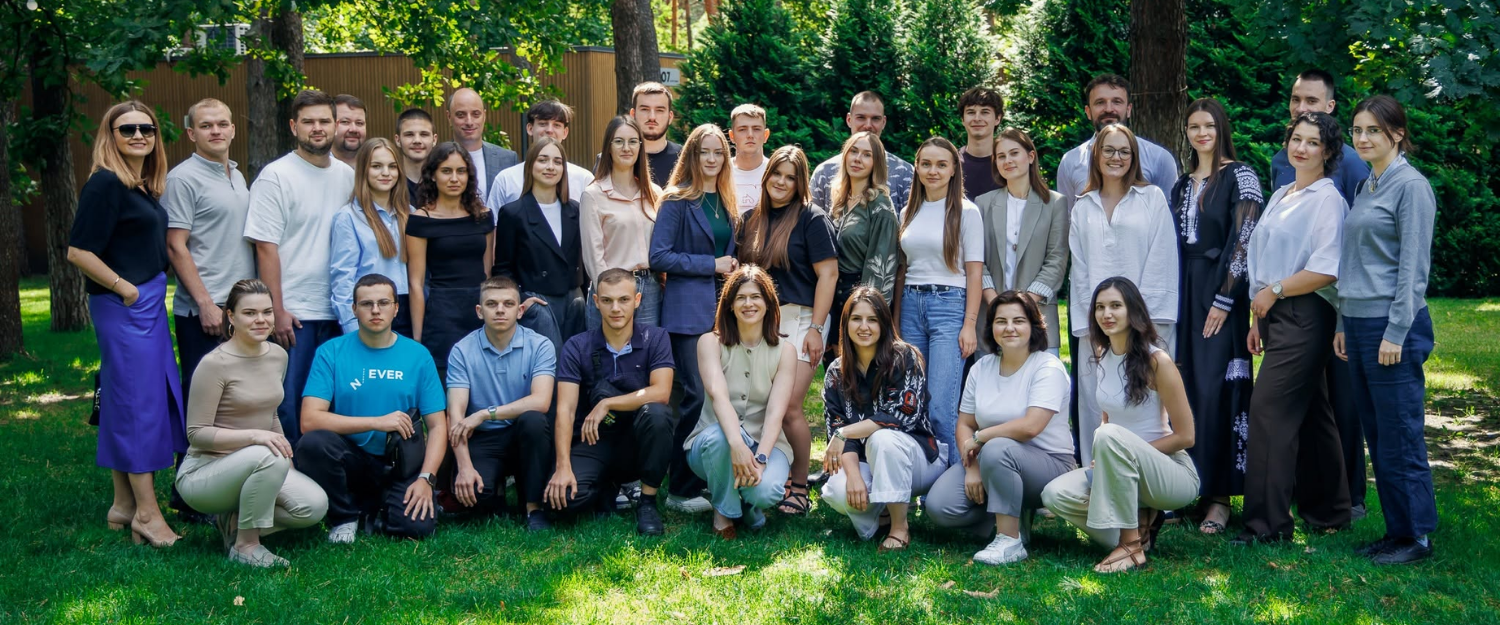
From 17 to 21 August, this journey was shared by law students in their fourth year and above. Following a competitive selection process, we formed a group of 25 participants from 10 universities. The largest groups came from Yaroslav Mudryi National Law University — 10 students, the UCU Faculty of Law — 5, and the Faculty of Law at NaUKMA — 4.
The group represented 15 regions of Ukraine: Kyiv, Ternopil, Lviv, Volyn, Dnipropetrovsk, Kharkiv, Poltava, Odesa, Sumy, Zhytomyr, Khmelnytskyi, Ivano-Frankivsk, Chernihiv, Zaporizhzhia, and Donetsk regions.
For us, this diversity was an important part of the School. Learning happened well beyond the formal sessions. Five days together meant a constant exchange of experience among students from different universities and cities, conversations after sessions, and opportunities to test one’s own views through discussion with others.
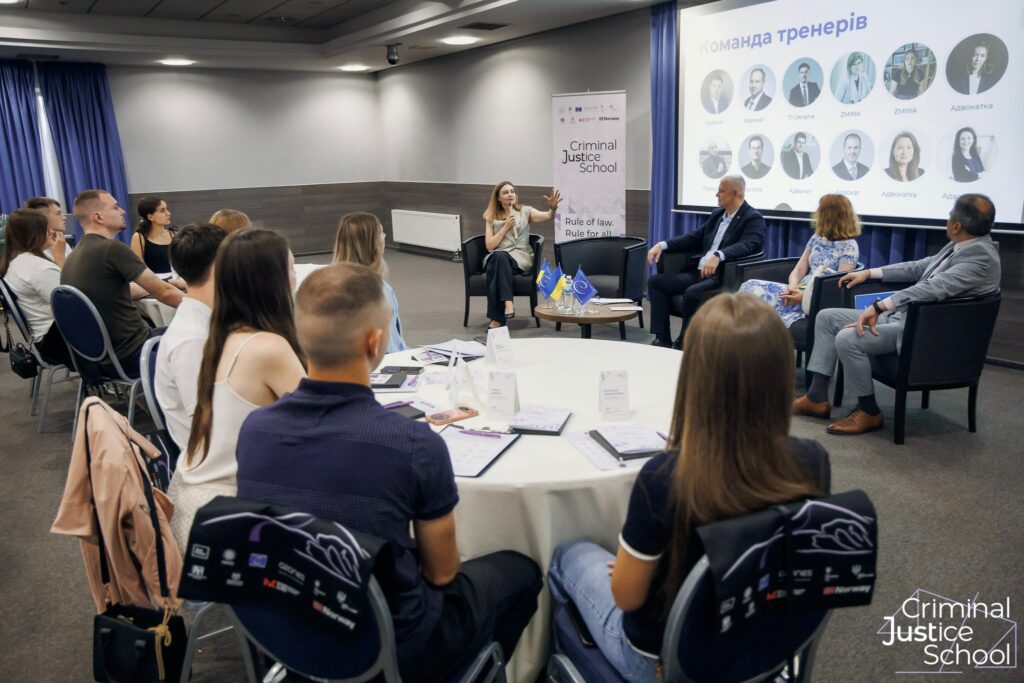
“We very deliberately built this Summer School around the theme of human rights. In the context in which we live today, we believe it is essential not to lose sight of the values on which the criminal justice system should be built. Working with Ukrainian students — people who are open to new ideas and eager to learn — is always a great joy for us,” mentioned at the opening Vasylyna Yavorska, Head of JustGroup.
We invited professionals who see the criminal justice system from different perspectives to work with the students: judges, prosecutors, attorneys, detectives, investigators, human rights defenders, academics, and international experts. This made it possible to examine the same issue from several angles and to see how principles that students read about in textbooks operate in real professional situations.
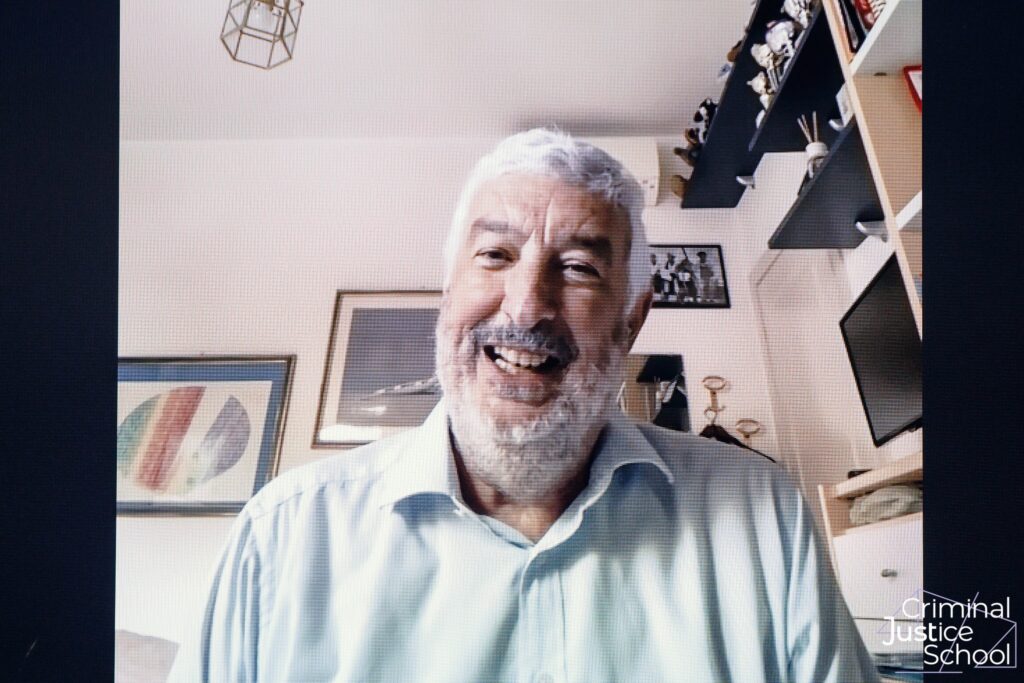
For the second year in a row, the International Bar Association (IBA) joined the Summer School as an international partner. IBA President Claudio Visco took part in the opening online. Reflecting on this year’s theme, he highlighted the particular significance of Ukraine’s experience:
“You are one of the best examples of how to work with human rights during wartime. At many of our events in different countries, this remains largely a theoretical discussion, while you are working in a context that presents new challenges to human rights protection every day. This is precisely why we are particularly committed to supporting this initiative,” Claudio Visco emphasised.
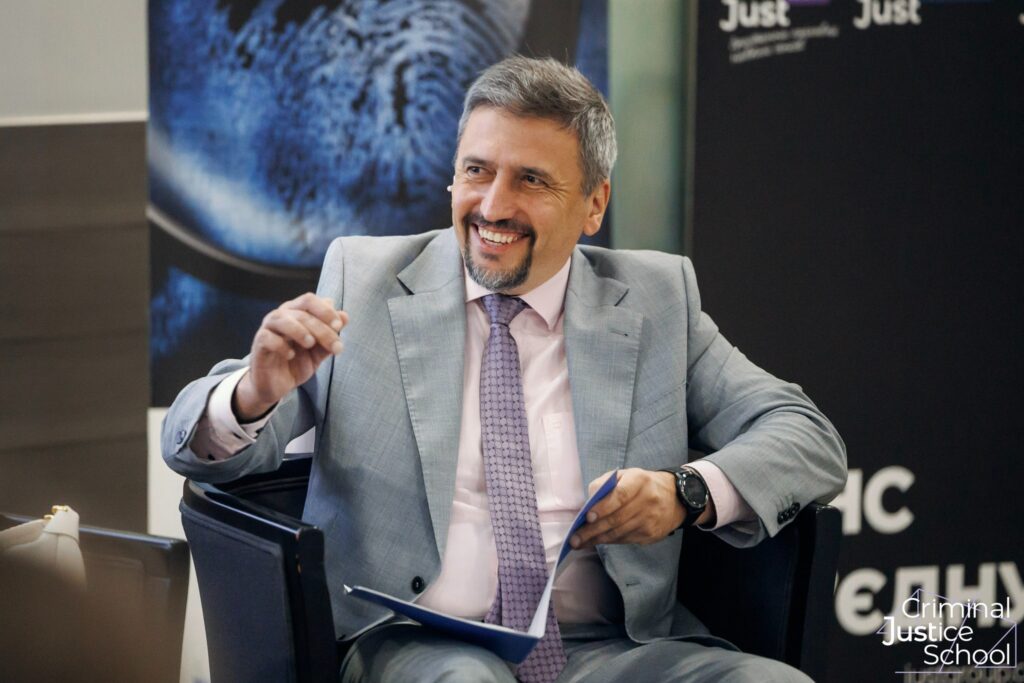
Maciej Janczak, Head of the Council of Europe Office in Ukraine, stressed the particular responsibility that the next generation of legal professionals will carry:
“You will not simply inherit Ukraine’s justice system – many of you will have an opportunity to shape what it becomes. Legal knowledge will be indispensable, but knowledge alone will not be enough. Integrity, independence, professional courage and respect for human dignity will be equally important. The justice system you help build must be capable of ensuring accountability and delivering justice while remaining firmly anchored in human rights, democracy and the rule of law.”
First, understand what exactly we are protecting
Before discussing interviews, evidence, seizure of assets, or the fairness of a trial, we began with the foundation: the very concept of human rights.
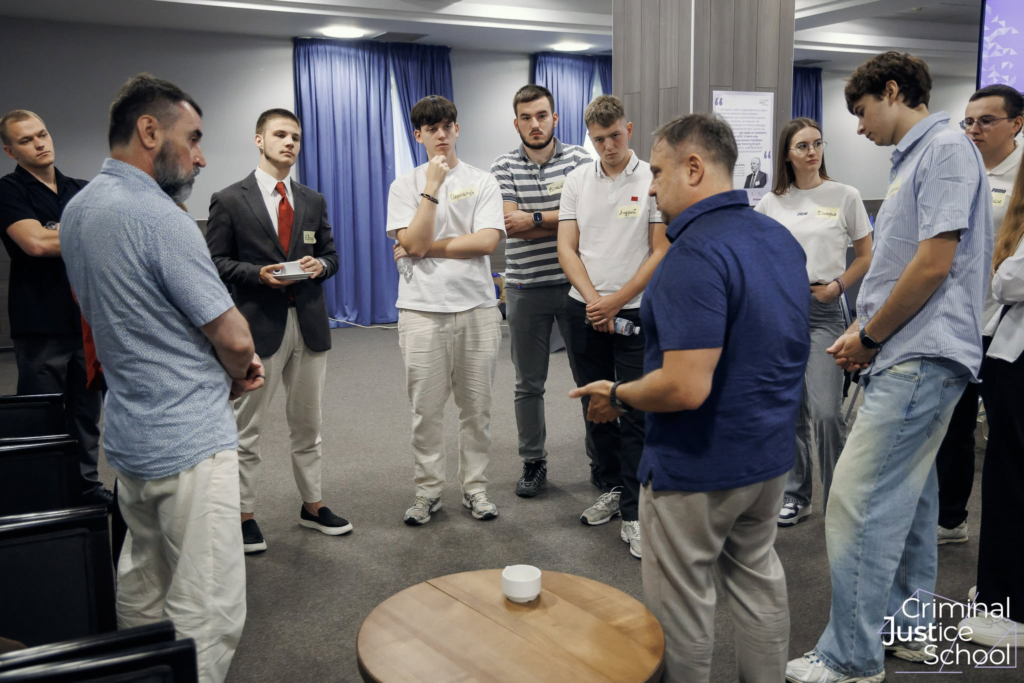
With Serhii Zaiets, attorney and Counsel at Azones, participants traced how the modern understanding of human rights developed and why it continues to evolve. With Ivan Lishchyna, attorney, Partner at Fortior Law, and Government Agent before the ECtHR from 2016 to 2021, they moved on to the logic of the European Convention on Human Rights and the case law of the European Court of Human Rights. Using concrete situations, students examined how to assess state interference with human rights and apply the three-part test.
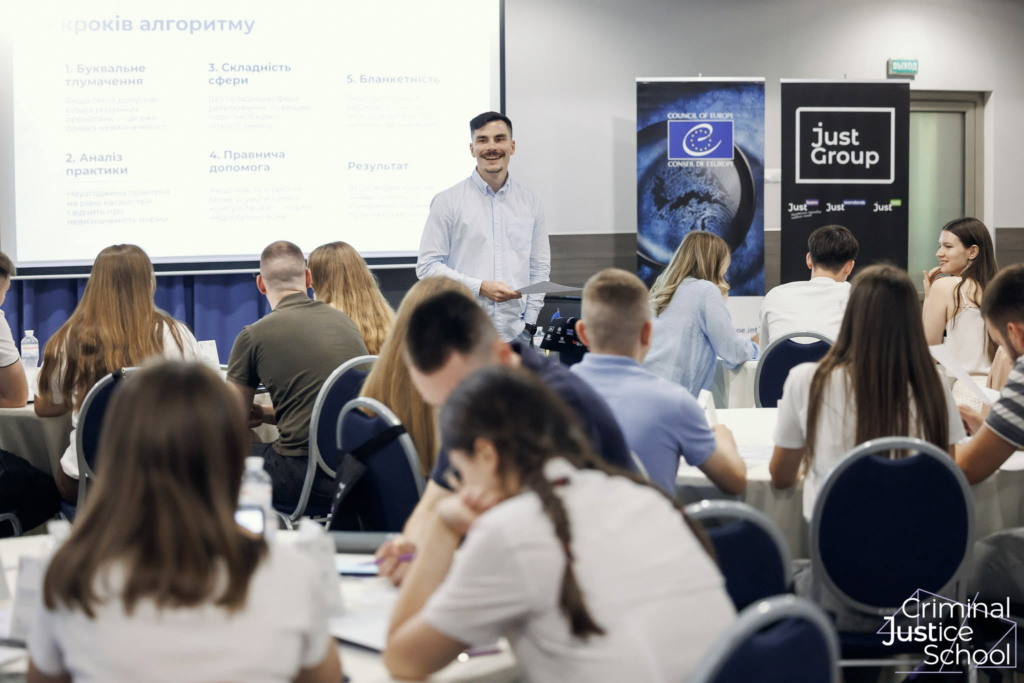
With Pavlo Demchuk, Senior Legal Adviser at Transparency International Ukraine, participants worked with legality as a cross-cutting standard of criminal proceedings. Then, together with Onysiia Syniuk, Head of Analytics at the ZMINA Human Rights Centre, they tested these ideas against a Ukrainian example — criminal liability for collaboration, relevant case law, and evidentiary challenges.
In the evening, the format changed, but the questions remained. During a legal film club with Daria Svyrydova, attorney and Partner at Azones, and Maksym Yelihulashvili, expert at the TolK Analytical Group, participants watched Operation Finale and discussed the legal and moral dilemmas raised by the story.
“Remember that behind every volume of a case file there is a specific story, a specific person. It is important not to become merely a functionary within the criminal justice system, but always to remain human. Do not wait for the courts, prosecution service, or other institutions to become perfect. You yourselves are part of the standard that society will learn to trust. Enter the system, work with principle and professionalism, and recognise your own agency in the new legal reality that you will have to build,” Daria Svyrydova emphasised.
What happens to these principles during war?
The next day, we deliberately made the context more difficult. If human rights define the limits of state action, how do those limits operate during armed conflict?
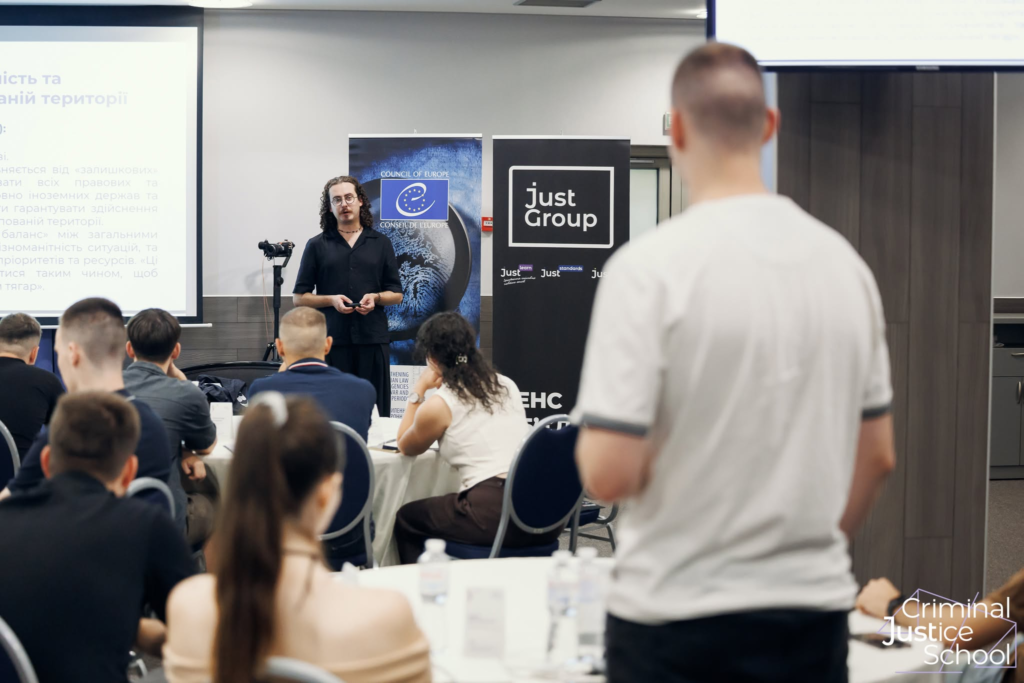
With Maksym Vishchyk, Senior Lecturer at the Faculty of Law at NaUKMA and Legal Adviser at GRC, participants explored the relationship between international humanitarian law and international human rights law, with a particular focus on the right to life.
IBA representatives Ian Edwards and Paola Fudakowska discussed derogation and the guarantees from which a state cannot depart even in emergency circumstances. With Supreme Court Judge Oleksandra Yanovska, students examined the retroactive application of criminal law in international crimes cases and the role of customary international law.
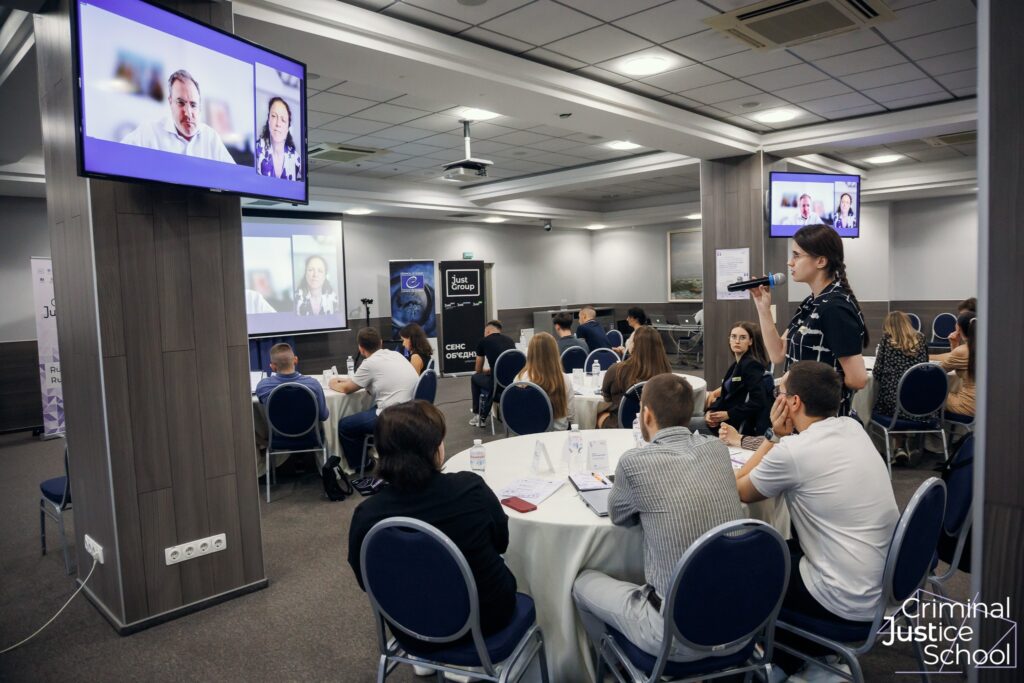
Together with Daria Svyrydova and Vitalii Sekretar, First Deputy Head of the Prosecutor’s Office of the Autonomous Republic of Crimea and the City of Sevastopol, participants discussed transitional justice. A separate part of the session focused on the experience of the Prosecutor’s Office as an institution operating “in exile”: how it continues to perform its functions and address the consequences of occupation without physical access to the territory under its jurisdiction.
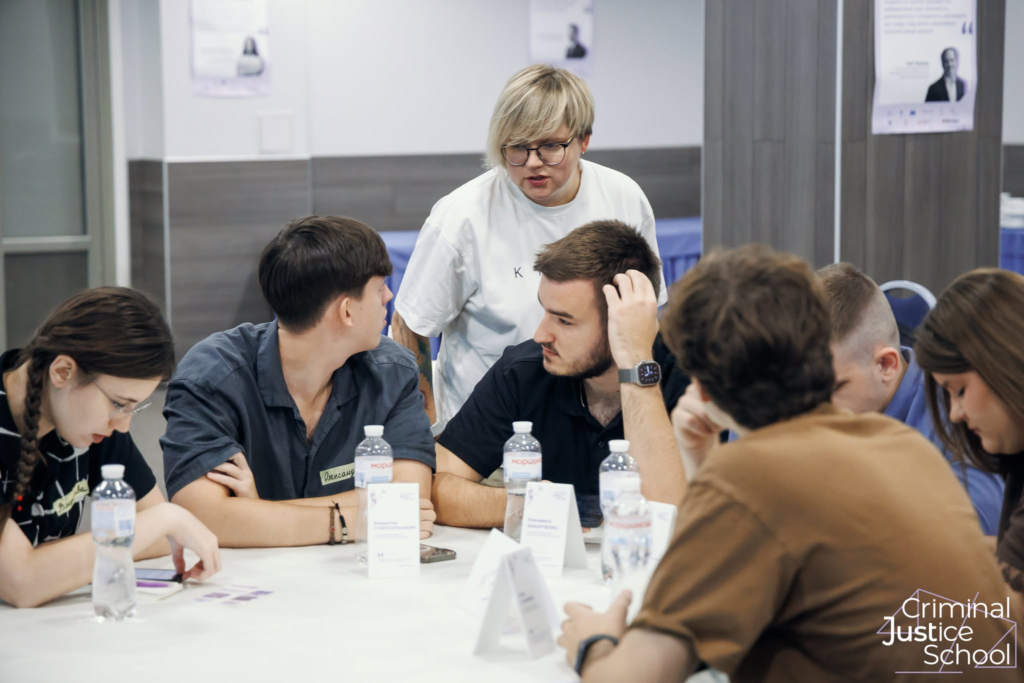
But that day, we wanted the students themselves to speak more. During interactive sessions with Alona Lunova and Serhii Zaiets, they were assigned different positions and had to defend them with arguments. The topics were deliberately chosen because they have no simple answers: exchanges of civilians and unlawfully transferred children, freedom of religion, mobilisation, and alternative service.
“I was convinced that after six years of study at one of the most prestigious universities, I knew a lot about human rights. But after just three days of deeper immersion in this topic, I realised that I still need to work much more and deepen my knowledge,” said Daryna Vasianovych, a sixth-year student at Yaroslav Mudryi National Law University.
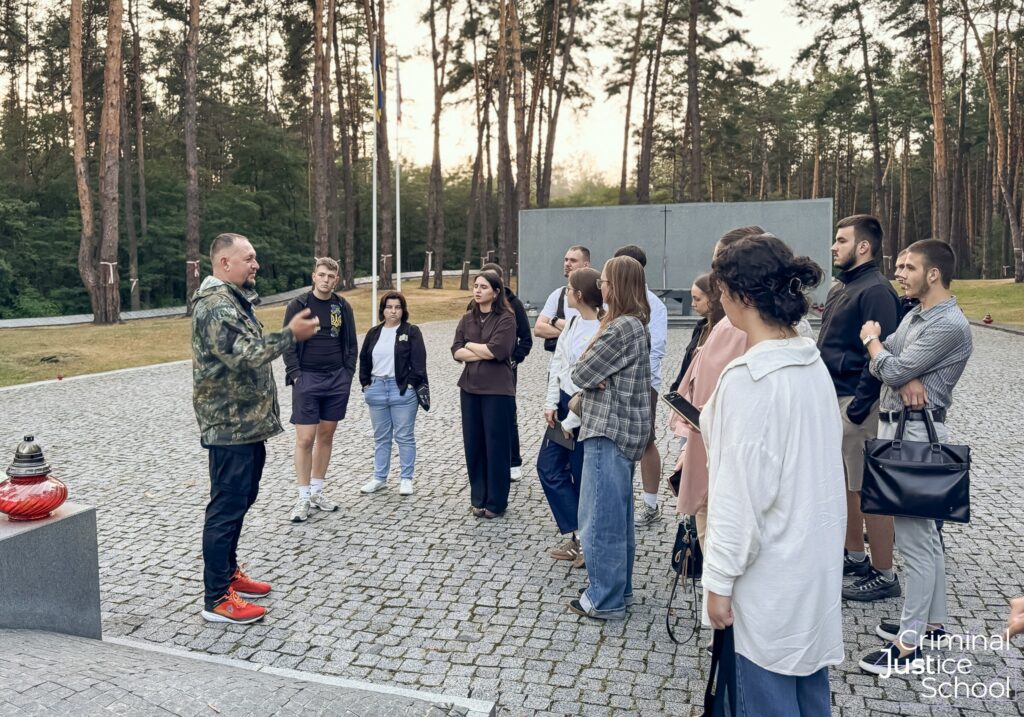
The day concluded at the Bykivnia Graves National Historical and Memorial Reserve. After working with contemporary wartime challenges, participants turned to the historical experience of political repression and the consequences of state violence. Roman Malenkov, the Head of the Ancient Kyiv State Historical and Architectural Reserve, led the tour.
A tool that offers an alternative
On the third day, we began with the absolute prohibition of torture and then moved to what a professional alternative to coercion in obtaining information can look like.
Together with Volodymyr Lysyk, Associate Professor of International Law at Ivan Franko National University of Lviv, participants examined the state’s obligations under Article 3 of the ECHR and the influence of ECtHR case law on Ukrainian criminal procedure.
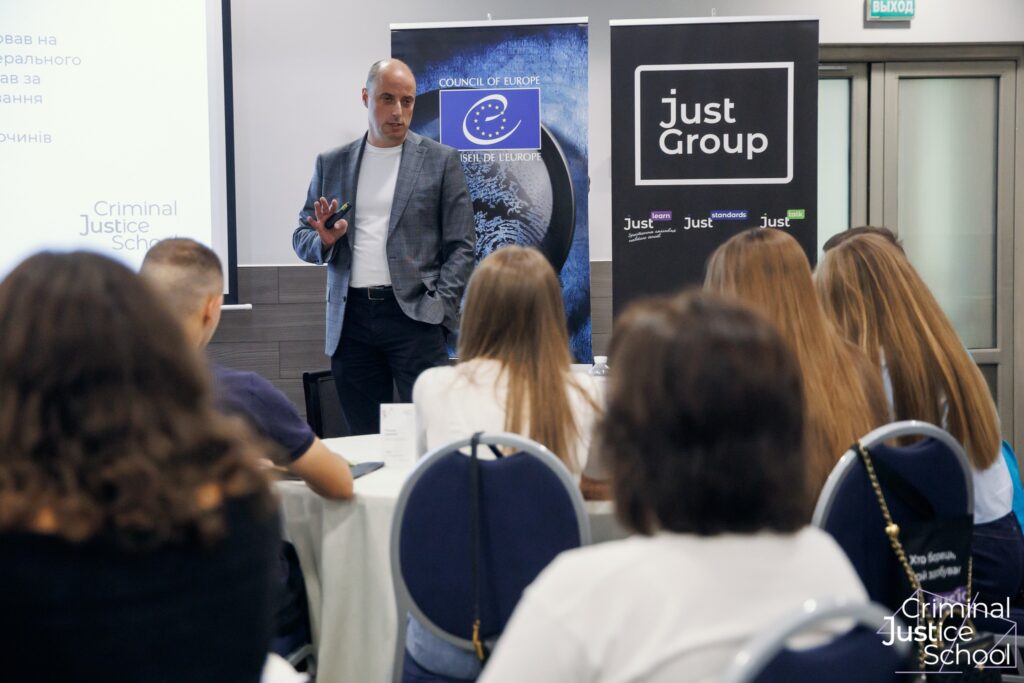
Yurii Bielousov, Deputy Director of the Bureau of Economic Security of Ukraine and Head of the Prosecutor General’s Office Department for Combating Torture from 2019 to 2022, brought the discussion into practice: from standards of effective investigation into ill-treatment to conditions that create risks of torture and mechanisms for preventing it.
From there, the group moved to Investigative Interviewing. Together with Yurii Bielousov and Volodymyr Vasylchuk, Deputy Head of a NABU unit, participants discussed the Méndez Principles and the transformation of the very purpose of interviewing: from obtaining a confession to gathering information that is as complete and reliable as possible.
“I want the participants of this School, in the future, to look back at the history of Ukrainian criminal justice and encounter things like torture only in textbooks or documentaries, rather than in their own practice,” said Volodymyr Vasylchuk.
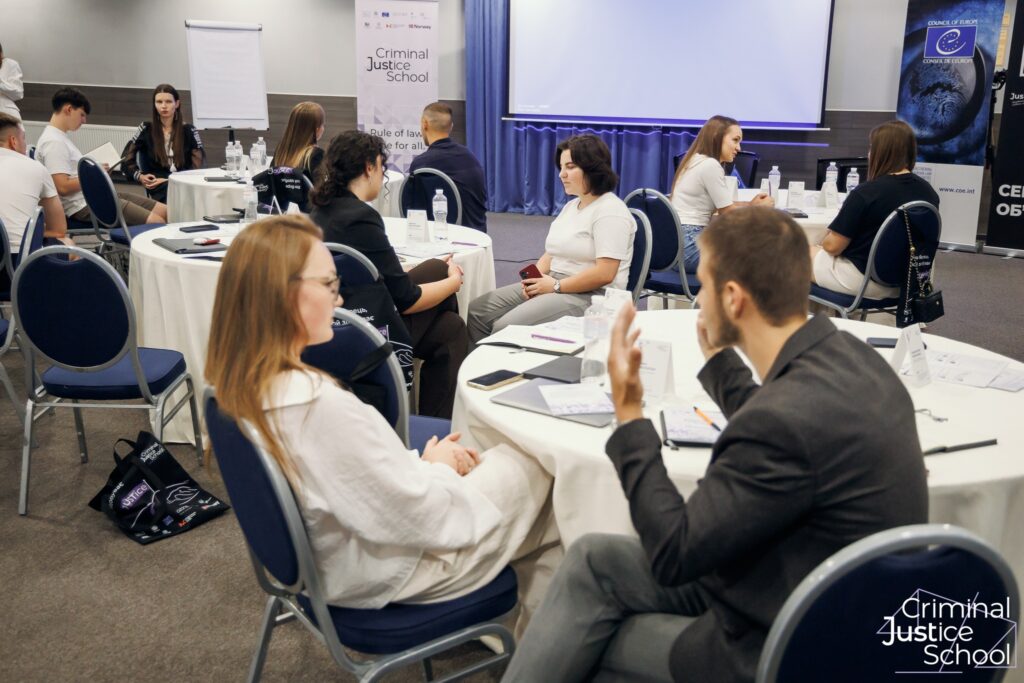
The students then had a chance to see how this approach works in practice. Together with Vitalii Kabaiev, Head of a NABU detective unit, and Iryna Samborska, prosecutor at the Prosecutor General’s Office, they worked with the PEACE model and real interview recordings adapted for training purposes. They analysed interviewer behaviour, identified strengths and weaknesses, and examined how subtle elements of communication can affect the quality of the information obtained.
In the evening, participants approached professional communication from a different angle. Den Dubravin, emotional intelligence trainer and practising psychologist, led a session on emotional intelligence as a skill for both professional and everyday life.
When does the state have the right to interfere?
On the fourth day, we moved to situations that may become part of the everyday work of future investigators, prosecutors, attorneys, and judges: access to digital information, seizure of assets, and attorney-client privilege.
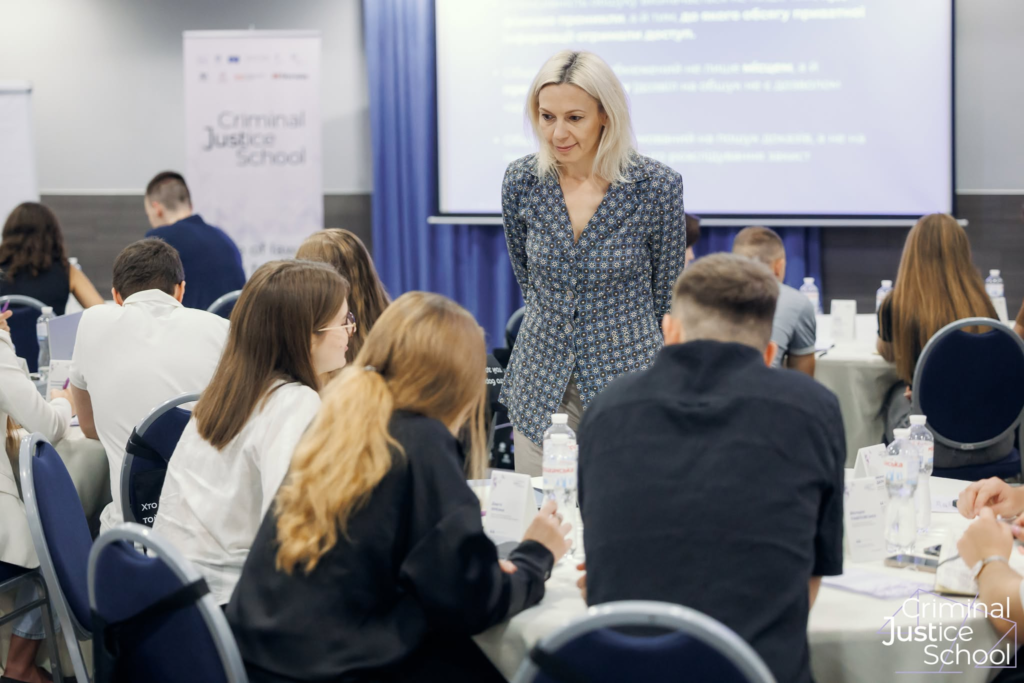
With Vira Mykhailenko, Judge of the High Anti-Corruption Court, students analysed the boundaries of privacy at different stages of an investigation. They worked with issues related to access to digital content on seized devices and the use of materials obtained through covert investigative actions.
With HACC judges Ihor Strohyi and Tetiana Kryklyva, participants discussed the right to peaceful enjoyment of possessions and how property-rights standards should be taken into account when assets are seized and confiscation mechanisms are applied.
With Ihor Parfylo, attorney and Counsel at ADVANQ, the students themselves tried to design a solution to a concrete problem. In a legislative workshop, groups developed a mechanism that could separate information protected by attorney-client privilege from evidentiary information stored on seized devices.
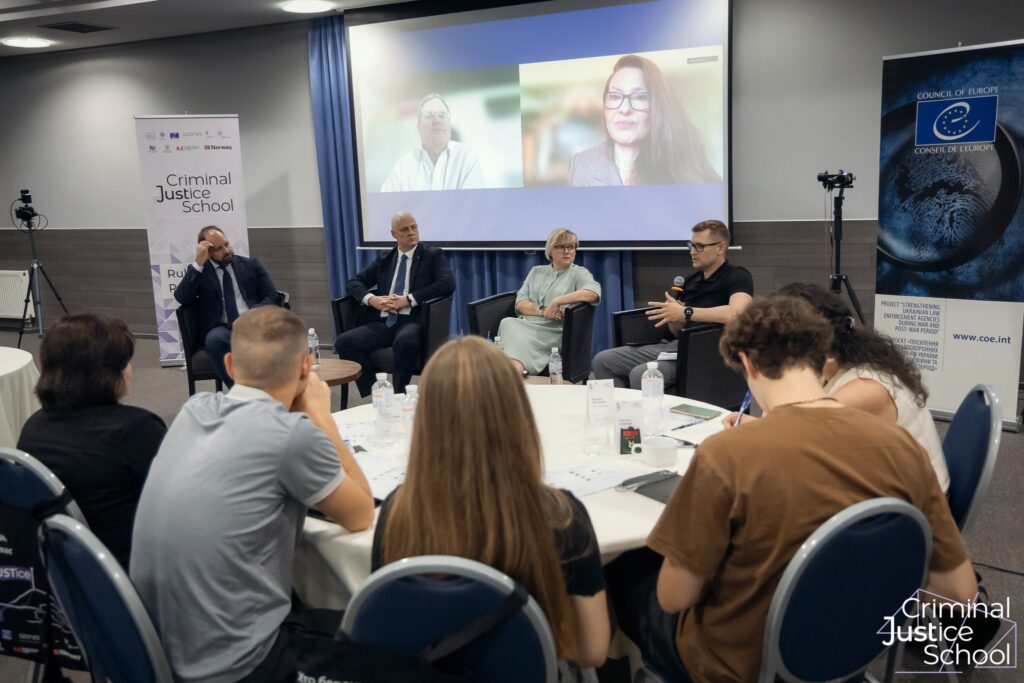
At the end of the day, different professional perspectives came together in one discussion. Ihor Strohy, Alona Lunova, SAPO prosecutor Ihor Polshchykov, and IBA representatives Ian Edwards and Elsa Wyllie discussed the limits of necessity in criminal proceedings. The conversation was moderated by Rasim Babanly, Chief of Staff of the Supreme Court.
They addressed the kinds of questions for which this School was designed: Does war change the permissible limits of restricting rights? How broad should the state’s access to digital data be? Can public pressure influence the choice of a preventive measure? And at what point does asset seizure stop being a procedural tool and begin to resemble punishment?
“Laws are written by people, and people can make mistakes. That is why it is important to know the law and also to assess it against human rights standards and values, compare it with practice, and ask whether it can be improved. When people’s lives and liberty, and the consequences of criminal prosecution, are at stake, critical thinking cannot simply be switched off,” said Alona Lunova.
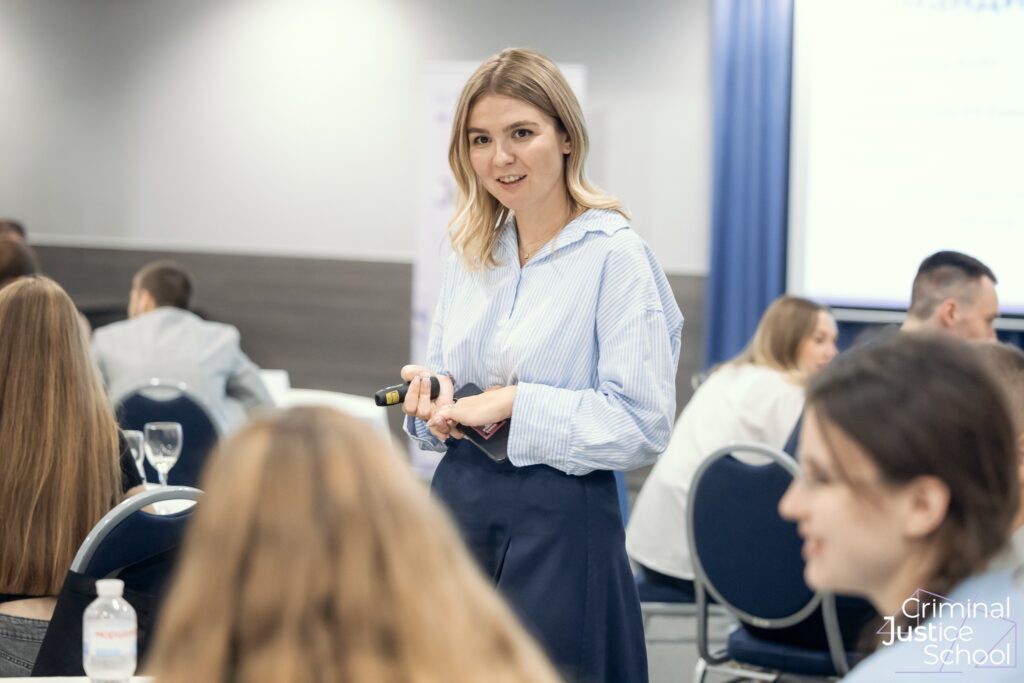
The final evening together was spent without criminal cases — at a Just Quiz by Zlata Busha. Five teams competed in their knowledge of film, culture, and law.
What makes a trial fair?
Over the previous four days, participants had examined criminal proceedings from many different angles. On the final day, all of those conversations led to the right to a fair trial.
With HACC Judge Viktor Nohachevskyi, students discussed the presumption of innocence and public communication in high-profile cases. Using decisions of the ECtHR, the Supreme Court, and the High Council of Justice, they analysed how public statements can affect the presumption of innocence and what tools courts have to respond to violations.
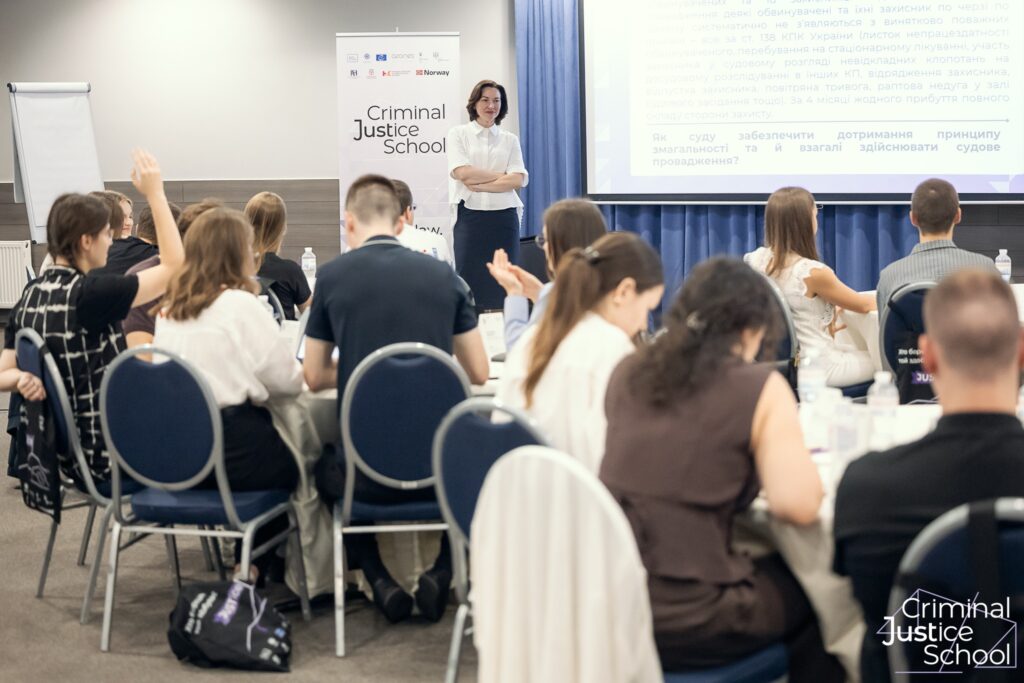
With HACC Judge Olena Tanasevych, participants worked with the principle of adversarial proceedings. During a practical exercise, they examined equality of arms, disclosure of materials, and defence access to covert investigative materials. The discussion focused on why a fair process requires a genuine opportunity for the defence to know the evidence and exercise its rights effectively.
The final practical session was led by Supreme Court Judge Arkadii Bushchenko. Students worked with evidence while knowing how it had been obtained, identified possible procedural violations, and decided how those violations affected the admissibility of evidence and the fairness of the proceedings as a whole.
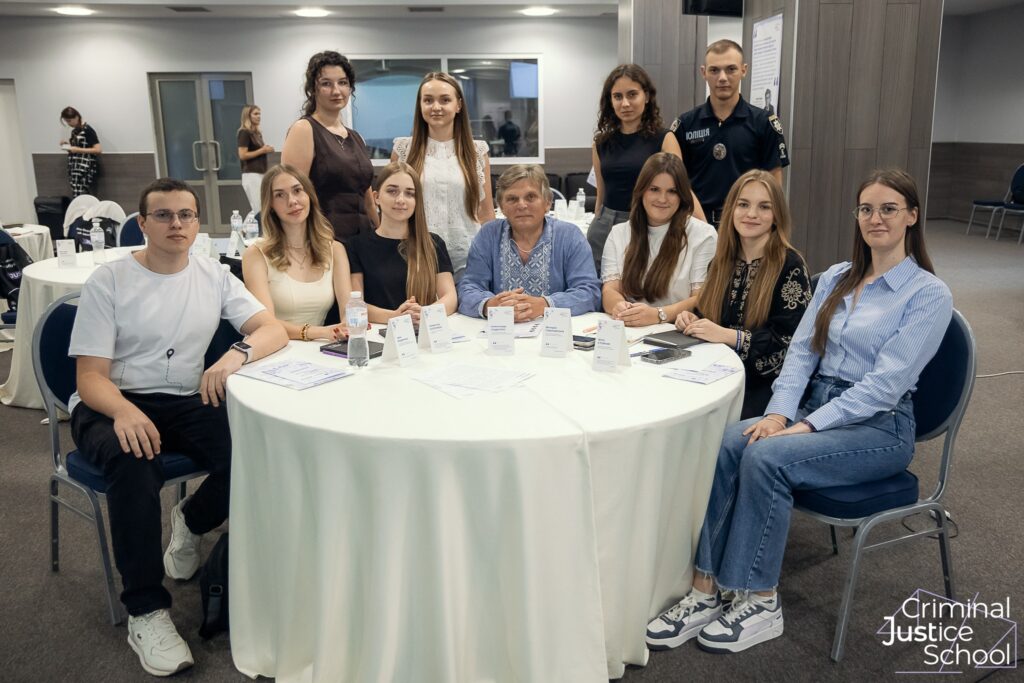
Ultimately, we returned to the question with which we had begun: reaching a fair decision requires more than correctly applying a legal rule. The path by which the justice system reaches that decision matters too.
What remains after five days
The final activity was a shared reflection. What mattered to us was not how well participants had memorised particular standards or ECtHR judgments, but what had changed in the way they saw the legal profession.
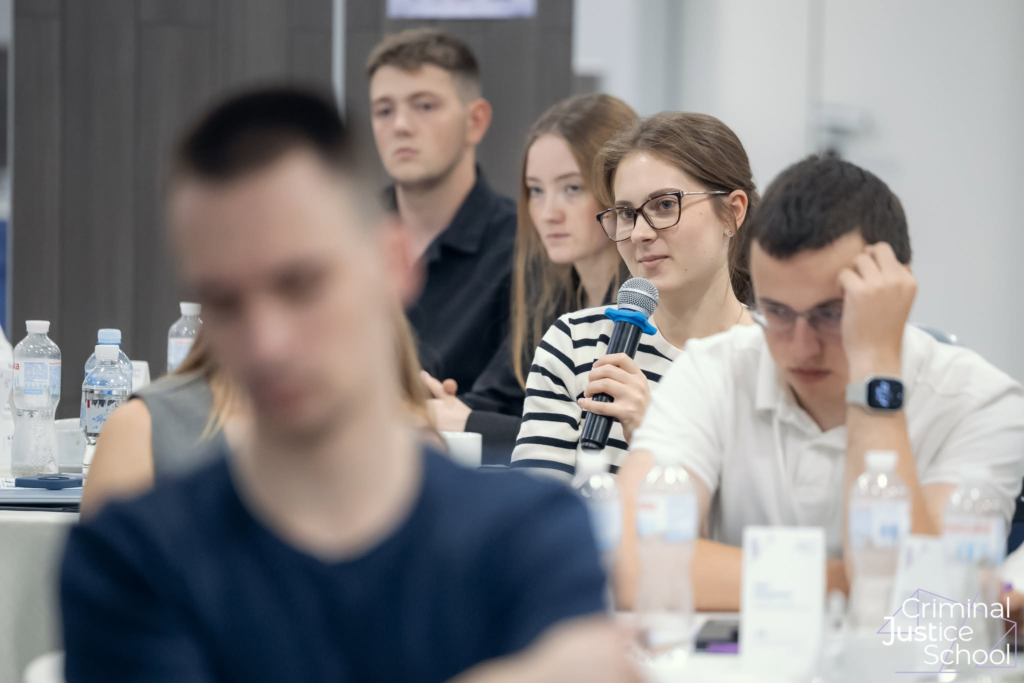
“Values are not something merely declarative. They are something we have to put into practice. Our legal system is currently undergoing transformation and facing enormous challenges connected with the war. At the same time, we have remarkable people and professionals who are developing Ukraine’s legal system,” said Iryna Panteleimoniuk, a fourth-year student at the Ukrainian Catholic University.
Over five days, students moved from discussing the origins of human rights to making concrete decisions about interviewing, private information, seizure of assets, attorney-client privilege, admissibility of evidence, and public communication.
We deliberately designed the programme so that legal standards were constantly accompanied by situations in which participants had to debate, doubt, test their own positions, and listen to the arguments of others. Because very soon, these students will face situations like these outside the classroom.
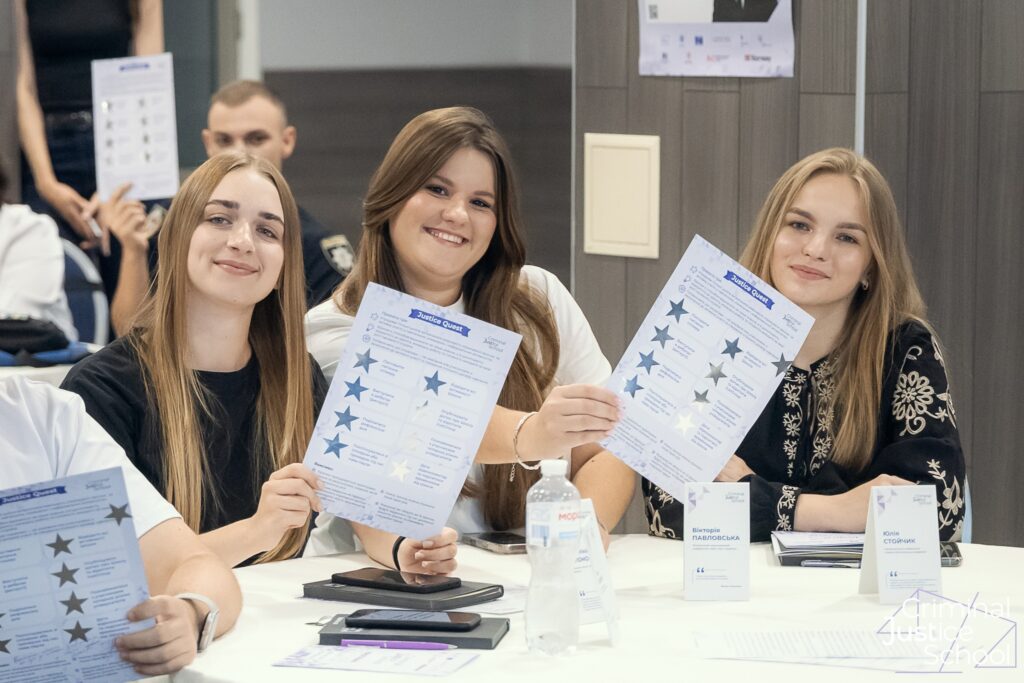
“I would definitely advise students to apply for the Summer School next year. It is a real opportunity to speak with practitioners, meet many new people, immerse yourself fully in criminal justice, and find like-minded peers. It also helps you better understand the challenges that professionals within the system face every day,” said Viktoriia Pavlovska, a fifth-year student at Lesya Ukrainka Volyn National University.
The III Criminal Justice Summer School has come to an end. But the connections, discussions, and professional questions that emerged during these five days remain with the JustStudents community.
The Criminal Justice Summer School 2026 is implemented by JustGroup with the support of the International Bar Association (IBA); the Norwegian Directorate for Higher Education and Skills (HK-dir) through the Nansen EDU programme, which supports a partnership between JustGroup, the Faculty of Law at NaUKMA, King Danylo University, and the University of Oslo; the Council of Europe Office in Ukraine; and Azones Law Firm, in partnership with the Supreme Court and the High Anti-Corruption Court.
Photos: Anna Putylina
More photos are available on the JustGroup Facebook page.