
JustGroup promotes holistic approaches to developing quality solutions based on the model of returning criminal justice to the de-occupied territories

As an organization, it is valuable for us to create and support groups of people who think together about ideas and approaches, to designing the future. We are convinced that now is the right time to formulate solutions that can help Ukrainian institutions change and people grow in them.
We are always happy when initiatives appear in our community to work with difficult tasks to design the future. Over the past 6 months, JustGroup has been pleased to become a platform for the work of an expert group on the design of a model for the return of criminal justice to the de-occupied territories. We have managed to bring together representatives of different legal professions — prosecutors, judges, investigators, experts, and academics — during the process of conceptualization of a potential model and its description.
The designed model will form the basis of the Strategy for the return of criminal justice to the de-occupied territories and will soon be presented to the Prosecutor General for review and approval.
“Immediately after the de-occupation of Crimea, we will face several tasks to restore the activities of public authorities and law enforcement agencies. These tasks will have to be performed in unfavorable conditions, including a difficult socio-economic situation, lack of personnel, etc. At the same time, we will need to ensure prompt and effective justice. The task of the working group is to develop a concept that will provide recommendations on personnel policy and preparation of the normative legal base, such as changes to the criminal procedure legislation, which will allow criminal justice authorities to effectively deploy the work in Crimea. And to do so as soon as possible after its de-occupation,” said Ihor Ponochovnyi, Head of the Prosecutor’s Office of the Autonomous Republic of Crimea and the city of Sevastopol.
The expert group included prosecutors, judges, lawyers, scientists and experts. They worked in five areas, the so-called clusters: (1) general and transitional provisions; (2) lost and unfinished Ukrainian criminal proceedings (before 2014); (3) cases initiated by the occupation authorities; (4) court cases and serving sentences; (5) material logistics and human capital.
JustGroup expert, and attorney at law, Yuliia Lisova was a member of the cluster team that developed the concept of the national criminal justice system’s work with criminal proceedings initiated by the occupation authorities on the occupied territories.
«It is very important to define the algorithms of work in this area now. It is obvious that at the time of de-occupation, someone will be held in detention, someone will be serving a sentence, and someone will be waiting for a decision on compensation for the damage caused by the crime. All this is within the framework of criminal cases conducted by the occupation authorities. Our group has been working on possible changes to the legislation that would allow us to resolve these complex issues and provide for the procedure for criminal justice authorities to deal with this category of cases,” Yuliia noted.
Marta-Mariia Yatsynina, a senior lecturer at the School of Law of the Ukrainian Catholic University, considered her participation in the group’s work as an opportunity for a lawyer to realize her vocation in times of war. In particular, she was involved in the work of the third and fifth clusters.
«When the war broke out, we understood that the legal system was not ready to regulate social relations. Perhaps this is normal because war is not a phenomenon you expect. But now we know that there are moments when you need to think about it in advance. There is no country whose similar experience we can adopt. We are pioneers, so it is important to think about it now. After de-occupation, there will be no time to think, but it will be time to act. And to act decisively,” says Marta-Mariia.
What to do with the occupier’s “legacy” in the criminal justice system? – this question was one of the most controversial issues in the clusters’ work. Two approaches to addressing this issue were presented at a public discussion on the topic “(Un)recognition of the occupier’s decisions and evidence: consequences for the criminal justice system of Ukraine, which have been considered on the JustTalk platform.

All the speakers agreed that it is essential to determine at the national level what the approach to understanding the documents is because this relates to criminal proceedings, property rights, and other things that are of great concern to Crimeans and residents of other occupied territories. The clearer the position of the authorities regarding future approaches to the resumption of activities in the de-occupied territories, the more likely Ukraine will feel the support of the local population.
The work with the Concept of the Return of Criminal Justice to the De-occupied Territories is an example of timely understanding of potential challenges and, along with dreams of victory and return of the territories, careful work on what this return might look like in terms of restoring the criminal justice system.
«For our organization, it is a value to cultivate such an approach to developing solutions for the criminal justice system that involves the involvement of various persons concerned, in-depth analysis, data collection and analysis, critical and constructive views from different sides, and a quality dialogue with professional communities. These are the prerequisites that allow us to talk about a potentially high-quality solution. We are grateful for the partnership with the ARC Prosecutor’s Office and representatives of our community who were ready to become part of the model design process,” says Vasylyna Yavorska, JustGroup team leader.
The preparation of the project of a model for the return of criminal justice to the de-occupied territories and other communication activities within the JustTalk platform was organized by JustGroup in cooperation with the USAID Human Rights in Action Program, implemented by the Ukrainian Helsinki Human Rights Union (details). Thus, in the period from August 2023 to June 2024, four discussions were organized with the participation of criminal justice practitioners, 11 editorials, and 16 author’s positions were published, including the research “On Collaboration Officially: Words Matter”, “Problems of Qualification of Collaboration Activities” and “Analysis of Court Practice according to Articles 111, 111-1, 111-2 of the Criminal Code of Ukraine for 2016-2022”.
In addition, 11 video episodes and podcasts of JustTalk Context were published in cooperation with the Supreme Court, with the participation of the moderator, a Supreme Court Judge, Oleksandra Yanovska, and leading experts from various fields on the current challenges faced by justice, with a special focus on problems related to conflicts and martial law (watch the videos). One of the episodes was devoted to discussing the need to prepare the criminal justice system for the return to the de-occupied territories. The moderator of the section talked about this with Vitaliy Sekretar, First Deputy Prosecutor of the ARC and Sevastopol, and Daria Svyrydova, lawyer and partner of AZONES.
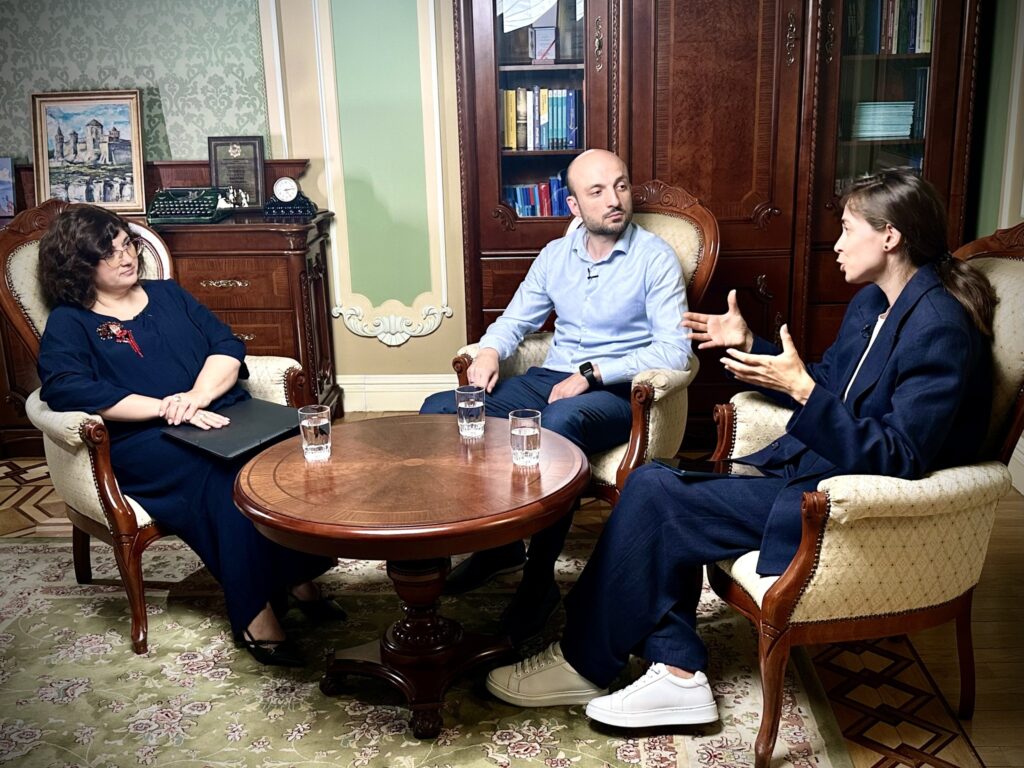
Under conditions of war, the criminal justice system faced challenges, which consisted, on the one hand of the need to investigate new types of crimes on a new scale, and on the other hand — working conditions deteriorated and the workload increased because the number of personnel in the criminal justice system did not increase.
The high level of workload and lack of working time for professional development creates the need to obtain up-to-date, relevant information on problematic issues of investigation and judicial examination of criminal offenses in the context of war.
We sought to provide the criminal justice system with high-quality analytics regarding the investigation of war crimes and their judicial examination, as well as to create platforms for communication between representatives of the professional community, and the national and international non-governmental organizations.
***
Publications, videos, and discussions within this project were made possible by the generous support of the American people through the United States Agency for International Development (USAID) in the framework of the Human Rights in Action Program implemented by the Ukrainian Helsinki Human Rights Union.
Opinions, conclusions, and recommendations presented in this publication do not necessarily reflect the views of USAID, the United States Government. The contents are the responsibility of the authors.
USAID is the world’s premier international development agency and a catalytic actor driving development results. USAID’s work demonstrates American generosity, and promotes a path to recipient self-reliance and resilience, and advances U.S. national security and economic prosperity. USAID has partnered with Ukraine since 1992, providing more than $9 billion in assistance. USAID’s current strategic priorities include strengthening democracy and good governance, promoting economic development and energy security, improving healthcare systems, and mitigating the effects of the conflict in the East. For additional information about USAID in Ukraine, please call USAID’s Development Outreach and Communications Office at +38 (044) 521-5753. You may also visit our website: http://www.usaid.gov/ukraine or our Facebook page at https://www.facebook.com/USAIDUkraine.


