Investigative Interviewing for Vulnerable Individuals. New training program development underway

Working with people in a state of vulnerability during an investigation requires a unique approach. Whether they are victims of war crimes, children, people with disabilities, or survivors of torture, their testimony is often critical. Still, the process of communication with them requires understanding their conditions and using approaches that take these conditions into account. At the same time, the interviewing process should be as sensitive and professional as possible.

During the training programs “Investigative Interviewing. Basic” we share the basic professional standards of impartiality and treatment with respect and dignity of all interrogated persons, regardless of whether they are victims, witnesses, or suspects. However, some interviews may be more challenging due to the vulnerability of the interviewees, specific risk factors, and other specificities of the situation.
Realizing this, JustGroup has engaged a national team of trainers and experts to develop an “Investigative Interviewing. Vulnerability” specialized training program. This is the next step after the basic course, which will give investigators and prosecutors a deeper understanding of working with people in different states of vulnerability and tools to obtain quality testimony without harming the person.

“We are grateful to our partners from the Norwegian Centre for Human Rights, with whom we organized an in-depth program for the training team last December. The purpose of this event was to give everyone a common understanding of the concept of vulnerability and demonstrate tools for recognizing vulnerability in the interview process,” says Vasylyna Yavorska, CEO of JustGroup. “As we develop investigative interviewing in Ukraine, we will offer practitioners the next level of growth through the new program. It will be available in September this year.”
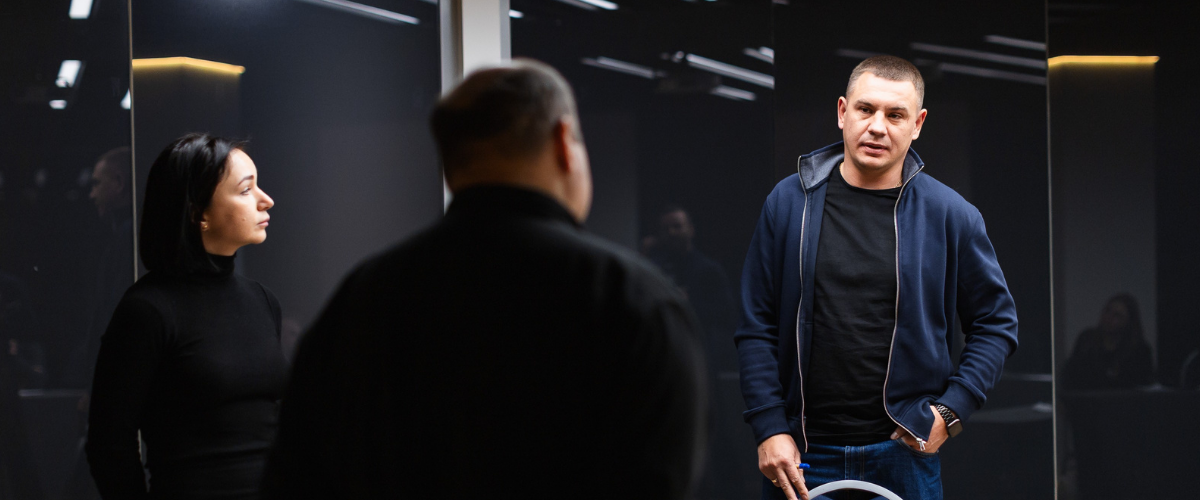
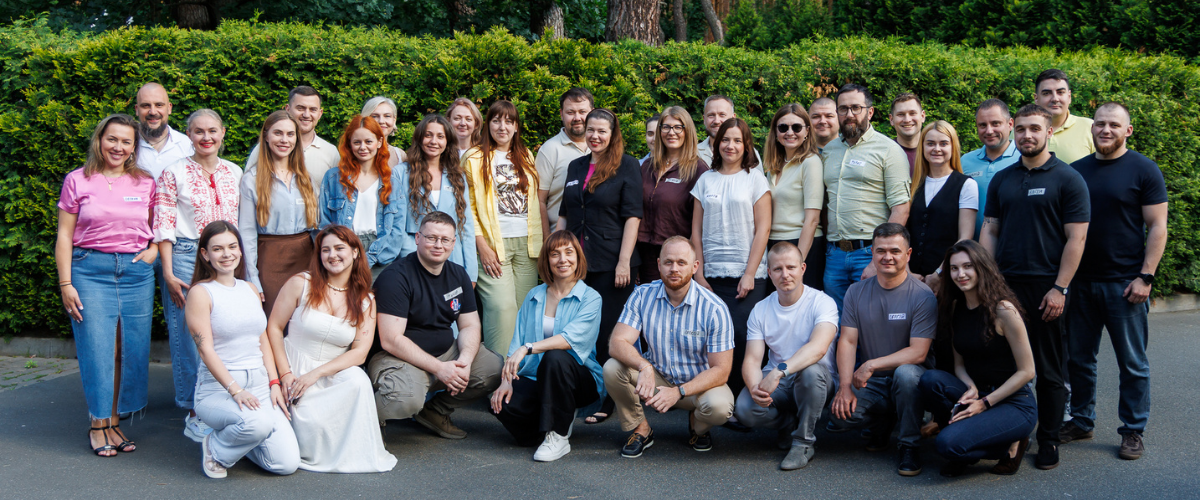
The development of a specialized training program was launched during a two-day session at the end of March 2025. During these days, the members of the national training and expert team worked together on the structure and content of the future program. They analysed the audience and its learning needs and defined the final learning outcomes at the level of knowledge, skills, and attitudes. We are grateful to Nataliia Rymar, a soft skills trainer, for her support and effective facilitation of the work on the program content.

“Over 157 thousand war crimes have been recorded during the Russian aggression. There are victims behind each of them. These are people who have experienced terrible events, which are extremely difficult to remember. Thousands have witnessed crimes. Without their effective participation in criminal proceedings, the truth may remain unknown, and the perpetrators may go unpunished. At the same time, working with people in states of vulnerability cannot be based on standard law enforcement practices. Investigators and prosecutors documenting war crimes must combine professionalism with empathy and humanity. Understanding the concept of “vulnerability” and applying special techniques will allow them not only to collect evidence efficiently, but also to protect the interests of the parties to the proceedings, leaving no chance for those who committed the crimes to escape responsibility,” said Taras Semkiv, Deputy Head of the Department for Combating Crimes Committed in the Context of Armed Conflict, of the Prosecutor General’s Office.
Law enforcement officers lack specialized psychological knowledge and tools to recognize vulnerability. They have not received relevant training and mostly rely on their intuition and experience when interacting with people with vulnerabilities. At the same time, many criteria should be considered, which can also be layered: age, physical and mental development, traumatic experience, language barrier, psychological immaturity, cultural characteristics, and low emotional intelligence.

For example, when children become involved in criminal proceedings, their vulnerability has a special depth, as it combines general aspects of childhood vulnerability with unique psychological, social and legal factors that have arisen due to the consequences of a criminal offense, violence, adult pressure, social rejection, prolonged uncertainty and lack of understanding of the outcome.

“In this case, the child has many vulnerability factors combined, which creates a so-called cumulative effect, where each factor reinforces the impact of others, significantly deepening the traumatic consequences, which can eventually lead to a deep crisis and definitely affect the child’s future. In recent years, juvenile prosecutors have been actively transforming the criminal justice system, with the best interests of the child as a fundamental principle. Ignorance of a child’s “world” cannot be an excuse for destroying his or her life,” said Olesiia Voloshyna, Deputy Head of the Department for Protection of Children’s Interests and Combating Domestic Violence of the Prosecutor General’s Office.
There is still a lot of work to be done to form both the program and the coaching team, but an important start has been made.
The development of the program “Investigative Interviewing. Vulnerability” is coordinated by the JustLearn development hub, supported by JustGroup, in cooperation with the Norwegian Centre for Human Rights (University of Oslo) with the support of the Transformative Recovery for Human Security in Ukraine project funded by the Government of Japan and implemented by UNDP Ukraine.
Photo: Anna Putylina