Deepening JustGroup’s cooperation with the University of Oslo and the NCHR to develop investigative interviewing in Ukraine

JustGroup’s partnership with the Norwegian Centre for Human Rights (NCHR), University of Oslo, marks an important milestone in the development of investigative interviewing in Ukrainian criminal justice.
The expertise of the NCHR is extremely valuable for Ukraine. It supports training a national team of trainers in investigative interviewing, as well as developing specialized programs focused on effective and sensitive work with children and others in vulnerable situations.
Recently, as part of this cooperation, JustGroup and the Norwegian Centre for Human Rights have jointly launched a series of advanced sessions for practitioners. The starting point was the online workshop on evaluation and feedback with Sigrid Buseth, Investigative Interviewing Instructor with over 35 years of experience in the Norwegian police force.
Study visit to Norway: A deeper dive into best practices
In June 2025, this cooperation continued with a study visit to Norway, which enabled Ukrainian specialists to observe the work of the Norwegian police first-hand and gain insight into their training system for interviewing.
“Along with developing a basic understanding and capacity to apply investigative interviewing during investigations, we plan to develop specialized programs and a team of experts and trainers. In particular, those who conduct interviews with children. We see this visit as a starting point for the systematic implementation of investigative interviewing as the basic standard for communicating with children in investigations. This involves both the development of a national interview protocol and the design and implementation of specialized training programs for Ukrainian practitioners,” noted Vasylyna Yavorska, Executive Director, JustGroup.

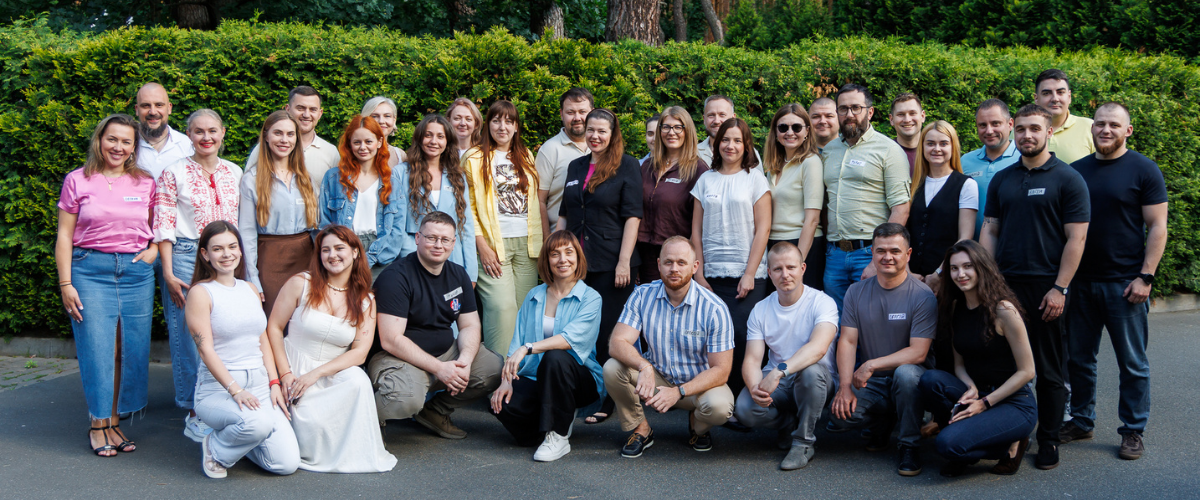
The Ukrainian delegation included juvenile prosecutors from the Prosecutor General’s Office, regional offices in Zhytomyr, Lviv, and Ternopil regions, as well as prosecutors from Kyiv district prosecutor’s offices. This visit allowed the participants to see firsthand the application of advanced techniques, exchange experiences with Norwegian colleagues, and gain valuable knowledge for the adaptation and implementation of these practices in Ukraine.

“Cooperation with Norwegian experts opens up unique opportunities for Ukraine to develop juvenile justice. This includes borrowing structured training programs for interviewers, using artificial intelligence tools, particularly for skills training, and studying the experience of implementing Barnahus, a model ensures the highest standards of child rights protection and the role of the prosecutor directly in all these processes,” emphasized Olesiia Voloshyna, Deputy Head of the Department for the Protection of Children’s Interests and Combating Domestic Violence, the Prosecutor General’s Office.
The study visit to Norway was organized by Sigrid Buseth and Katarina L. Friis-Olsen of the Norwegian Centre for Human Rights, funded by the Nansen Support Program in Ukraine, Norad.
“The efforts Ukraine is making to integrate investigative interviewing into its criminal justice system, with a strong emphasis on children’s rights, are truly remarkable. It is inspiring to witness this level of commitment and engagement despite the challenges posed by war. We hope we were able to give the delegation valuable insights into how Norway conducts interviews with children and how the legal framework to protect children’s rights is implemented by the police and prosecution. We are honored that Ukraine looks to Norway for guidance as they seek to develop this area further, and we are proud to collaborate with JustGroup”, said Sigrid Buseth and Katarina L. Friis-Olsen.
Introduction to the Norwegian law enforcement system: NCIS and the Police University College
The study visit of the Ukrainian delegation to Norway started with a meeting with Marthe Gaarder, State Attorney, Office of the Director of Public Prosecutions. She spoke in detail about the structure of the country’s law enforcement agencies, which is key to understanding a comprehensive approach to child-friendly justice.

During visits to the National Criminal Investigation Service (NCIS/KRIPOS) and the Stavern Police University College (SPUC), Ukrainian prosecutors learned more about the use of investigative interviewing techniques and law enforcement training.

At the NCIS, the delegation met Tone Davik, a police superintendent who has worked at the NCIS since 1998. She is a recognised expert in forensic interviews with children and other vulnerable individuals. Ms. Davik focused particularly on the history of how Norway has developed its current methods for interviewing children. She emphasized the importance of thorough preparations before entering the interview room. Additionally, she highlighted the significance of alternative methods for interviewing children with speech disorders. Previously, the law did not permit this, but now nine specialists have been trained in the use of symbols and pictures.
An important part of the program was a visit to the Stavern Police University College. Here, the delegation was met by Chief of Police Inger-Lise Brøste, responsible for training in Norway, who shared her experience with the police training system in the field of interviewing.

The college hosted a practical session with Sigrid Buseth (NCHR) and Elin Aune Jorde (NCIS, police superintendent). Working under their guidance, the Ukrainian prosecutors evaluated pre-recorded interviews, gaining valuable practical experience and deepening their understanding of the nuances of qualitative interviewing.

Visit to OsloMet University and introduction to Avatar
The prosecutors found a visit to OsloMet University informative, learning about the unique development of a research team led by Professor Gunn Astrid Baugerud. The team has created a training platform featuring dynamic avatars, which is designed to enhance the information-gathering abilities of law enforcement and child protection services during interviews.

This innovative, AI-powered simulator provides immediate feedback, notifying the user if a question is formulated incorrectly — for example, if a closed question is asked instead of an open one. In addition to basic training, the Avatar platform can be an effective tool for enhancing interviewing skills. According to our Norwegian colleagues, constant practice, self-reflection, and evaluation of interviews are key to developing and maintaining high-level employee skills.
“We have developed an AI-based child avatar for interview training, grounded in best-practice guidelines and combining insights from developmental and educational psychology with real-time AI technology. The system delivers realistic child responses, standardized training, and automated feedback — significantly enhancing interviewing skills and supporting long-term skill retention. Looking ahead, the solution will also be adapted to provide feedback on actual interviews, further strengthening professional development and quality assurance in practice,” said Gunn Astrid Baugerud.

This project, launched in 2019 with funding from the Norwegian Research Council, has several significant advantages that make it particularly attractive for widespread implementation:
- Scalability: The platform can be used by a large number of users at the same time, without being tied to a physical space.
- Cost-effectiveness: Eliminates logistical problems and costs associated with traditional forms of education.
- Flexible training schedule: Allows you to study at your convenience and anywhere (in the office, at home, or on a business trip).
- Immediate and detailed feedback: Artificial intelligence instantly analyzes the course of the interview and provides detailed recommendations.
The Avatar is still under development and is not currently used by the Norwegian police or in cadet training. However, it could potentially become part of the training for police interviewers as research continues.
Meeting with the Barnahus team in Sandefjord: A valuable experience for Ukraine
A key part of the study visit was a meeting with the Barnahus team in Sandefjord. This centre is a prime example of an effective interdisciplinary model aimed at protecting children who have experienced violence or witnessed crimes. Barnahus brings together the police, prosecutors, social services, and medical professionals to provide children with the safest and most comfortable environment possible during investigations.

Ukrainian specialists were particularly interested in the approach of their Norwegian colleagues to conducting investigative interviews with children. Unlike in Ukraine, where interviews with children are limited to two hours, there are no strict time limits in Norway. This enables professionals to work with the child for as long as is necessary to obtain complete and reliable information while taking into account the child’s psychological and emotional state, and avoiding the risk of causing additional trauma. This flexible approach enables the interview process to be adapted to the individual needs of each child.

Norway’s experience is highly relevant to Ukraine, where the Barnahus model is also being implemented. There are already 12 such centres in Ukraine, 10 of which were opened after Russia’s full-scale invasion. However, the existing infrastructure does not fully meet the real need as it only covers part of the country.
Key insights: The key to an effective Investigative Interviewing
During their visit to Norway, the Ukrainian delegation gained valuable insights into the critical importance of professional training and a personalised approach to investigative interviewing, particularly when working with children.
- Universality of skills: Norwegian experts emphasized, “If you learn how to conduct effective interviews with children, so will others.” This is because working with children is the most difficult due to their vulnerability, peculiarities of perception, and the possibility of secondary traumatization. Mastering these complex skills enables an interviewer to work effectively with any category of respondents.
- The importance of thorough preparation: It was emphasized that thorough preparation is a crucial step in conducting interviews. It includes careful collection of information about the circumstances of the case and the characteristics of the child. It is the responsibility of the interviewers to collect the necessary information and communicate effectively with the child’s representatives.
- Four fundamental principles: Every interview, regardless of the individual approach to the child, should be based on four basic principles: safety, understanding, predictability, and involvement. Their observance guarantees the creation of comfortable conditions for the child, promotes openness, and prevents additional stress.
- Interviewer Specialization: delineating the roles of police officers who conduct interviews and ensuring their continuous and systematic specialized training. This approach allows for the focusing of training resources on specific professionals, thereby building a team of high-quality interviewers who can be effectively engaged in a wide range of cases.
- Consequences of unprofessional interviewing: Experts emphasised the particular risks associated with interviewing by persons who have not received special training. Such actions can re-traumatise the child, causing emotional harm and distorting their account of events through suggestion. This, in turn, can harm the course of the criminal investigation.
These insights confirm the need for a systematic approach to training and certifying interviewers in Ukraine, to ensure that children’s rights are protected to the highest standard in criminal proceedings.

JustGroup expresses its sincere gratitude to the Norwegian Centre for Human Rights, University of Oslo, for its systematic and long-standing partnership. Their openness and unwavering commitment to sharing their best practices in investigative interviewing and child rights protection are invaluable to Ukraine, particularly given the current priority of transforming the justice system.