JustGroup’s Public Position: Clear Role, Expectations and Criteria — Not Names
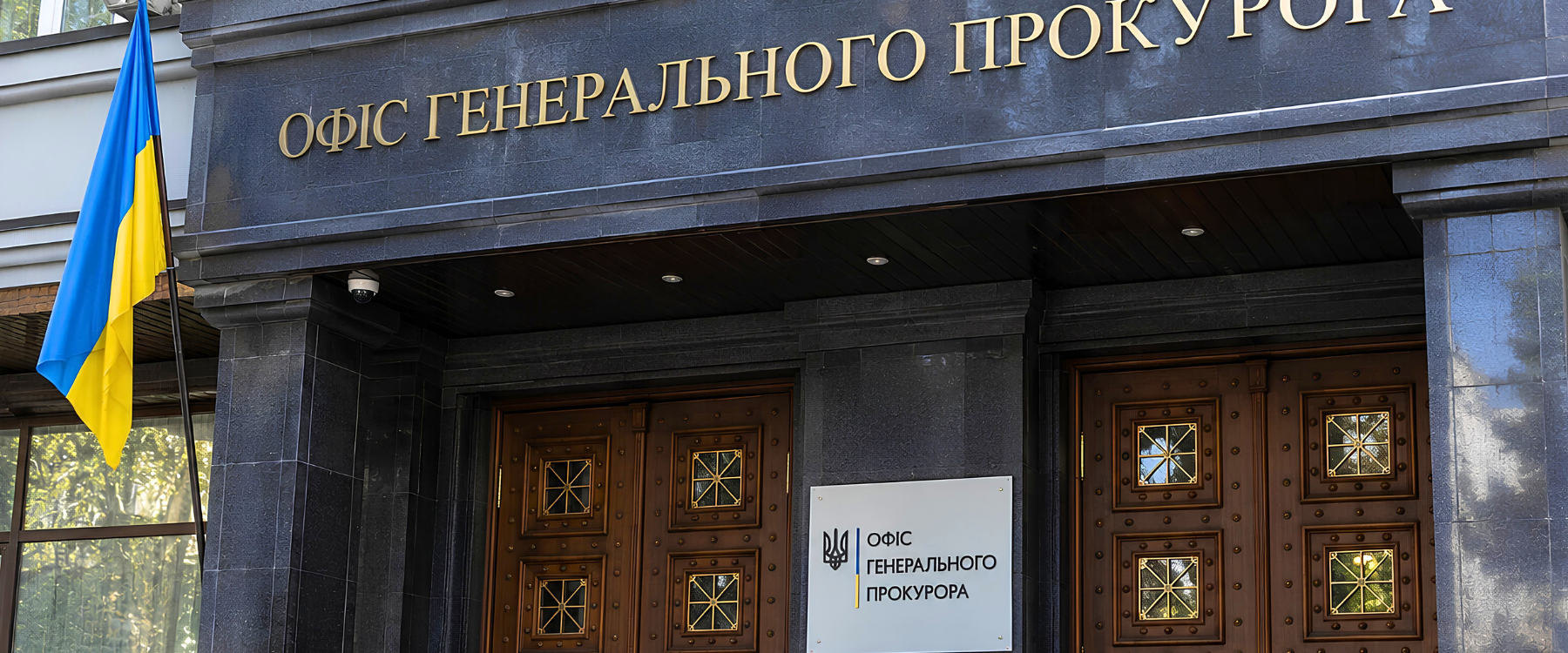
The dismissal of Prosecutor General Ruslan Kravchenko amid an investigation by NABU and SAPO once again raises a question for Ukrainian society: who will lead the prosecution service next?
The history of this office in Ukraine is marked by appointments that have too often been driven by political loyalty or personal relationships rather than by whether a candidate is suited to the role and the functions the Prosecutor General is actually expected to perform.
Over the past few days, this issue has prompted extensive internal discussion within the JustGroup community. As a summary of these discussions — and perhaps an introduction to a broader public conversation — we would like to highlight several points that we consider important:
- Putting names at the forefront does not solve the underlying problem. Asking “Who is next?” reduces a highly complex issue to a single appointment and prevents us from seeing the broader context.
- We believe it is essential to articulate and discuss the role of the Prosecutor General itself and the expectations associated with it. Time and effort should be invested in examining this role from different perspectives, involving professional communities, experts, and international partners supporting the development of Ukraine’s criminal justice system.
We see several important dimensions that should inform this discussion.
The Prosecutor General is more than the head of an institution. The Prosecutor General is the person who:
- organises the work of Ukraine’s entire prosecution service and defines the scope of authority of regional and district prosecutor’s offices;
- appoints prosecutors to administrative positions and shapes human capital management policy across the prosecution service;
- shapes a unified state policy on criminal prosecution and works to coordinate cooperation between prosecution and law enforcement bodies;
- sets the tone and professional standards for prosecutors as holders of a role of significant public importance in ensuring justice;
- represents Ukraine in relations with prosecution services of other states and international organisations, effectively serving as one of the faces of Ukraine’s criminal justice system for international partners.
We recognise the importance of having clear, publicly articulated criteria for appointing a new Prosecutor General, as well as a transparent and predictable selection process.
The Prosecutor General has a direct impact on the fairness and effectiveness of investigations and prosecutorial supervision of pre-trial investigations, as well as on the extent to which international partners trust Ukraine’s justice system, its outcomes and decisions. This trust has implications for Ukraine’s progress towards EU membership, continued international funding, negotiation processes and security guarantees.
The Law of Ukraine “On the Prosecutor’s Office” (hereinafter — the Law) establishes minimum eligibility requirements for the position of Prosecutor General. These requirements are necessary, but clearly insufficient. Formal years of professional experience and a degree guarantee neither managerial capacity nor independence, nor the ability to withstand political pressure.
This is why we insist on the importance of critically examining and defining a broader set of criteria to be taken into account when selecting a candidate.
Factors that, in our view, should inform the final selection criteria
Professional capacity
Substantive rather than merely formal experience in criminal law and criminal procedure, including experience in investigations, prosecutorial supervision of pre-trial investigations, or oversight of complex cases of significant public interest, as well as experience working within or interacting with prosecution bodies.
Management experience in leading a large institution or its structural units, as well as experience in building institutions or organisational units. Ukraine’s prosecution service employs thousands of people. Without institutional management experience, it is impossible to systematically design and manage change from within an institution of this scale and complexity.
A clear understanding of the purpose of the criminal justice system and the value it creates for society, as well as knowledge of international criminal justice standards and the EU requirements concerning its transformation.
Independence and integrity
No established conflicts of interest, including personal or business ties with influential groups that could themselves become subjects of prosecution investigations.
Publicly verifiable integrity, including asset declarations and financial standing, and the absence of facts that could reasonably call into question the candidate’s independence from the country’s political leadership.
The willingness and ability to publicly defend the independence of the anti-corruption infrastructure — NABU and SAPO — even when investigations concern individuals from the closest political circles, and equally to uphold the independence of other criminal justice institutions. The Prosecutor General should respect and foster independence as an essential safeguard for the work of every prosecutor.
Communication and reputational responsibility
An understanding of how public statements and actions by the prosecution service affect the presumption of innocence, public trust in investigations and prosecutors, and Ukraine’s reputation among international partners.
Experience in, or readiness to build, a transparent and consistent institutional communication policy rather than responding to each controversy on an ad hoc basis.
Transparency of the selection process itself
JustGroup believes that the procedure for selecting a candidate should be as transparent as possible. This should include publication of the criteria before a candidate is nominated, opportunities for public and expert discussion, meaningful involvement of prosecutorial self-governance bodies, and participation of international partners as observers or advisers, drawing on approaches already used in the selection processes for NABU and the HACC.
There should also be honest and transparent public communication explaining how a particular candidate meets the stated criteria.
We believe this is precisely the moment when prosecutorial self-governance could take a genuinely meaningful and visible position — one that demonstrates the capacity and significance of this institution.
The views of the prosecutorial community, which knows the system from within, are particularly valuable now. Practitioners are well placed to identify the qualities genuinely required for this position beyond the formal statutory requirements. Remaining silent at such a moment is also a choice — but not one that strengthens trust in either prosecutorial self-governance or the prosecution service as a whole.
The Council of Prosecutors has the right to respond publicly to threats to prosecutorial independence and to submit proposals to public authorities (Article 71 of the Law). JustGroup calls on the Council to exercise this right fully: to formulate and publicly articulate its own position on the criteria for the office of Prosecutor General.
A prosecutorial self-governance body should not be a formality that exists only on paper. Moments like this reveal whether it is a functioning institution or merely a façade.
Our Position
We believe the first step should be to define and articulate the role of the Prosecutor General and publicly establish the criteria for candidates for this office. Only then should the discussion move to specific individuals.
The history of this office in Ukraine shows that when appointments are driven by loyalty rather than competence and independence, the country repeatedly returns to the same point: loss of trust, dismissal or resignation, followed by another cycle of political instability surrounding the criminal justice system.
This time, there is an opportunity to do things differently.
The selection of the Prosecutor General should be public and based on predetermined criteria and a clear procedure. This is an important prerequisite for public trust in the future Prosecutor General and for the legitimacy of their decisions.
Such an approach requires thorough professional reflection and an open discussion within professional communities and among experts. This discussion can lead to concrete proposals for changing the way the Prosecutor General is selected, including changes at the legislative level.
We are ready to create space for this discussion and bring together those who know the system from within and are prepared to take responsibility for its future.