Anti-Corruption Edition: How Standards Shape Common Investigative Practices

The standardisation of pre-trial investigations continues to evolve. It began with the classic development programme, followed by the War Edition dedicated to the challenges of investigating war crimes. Today, the programme has expanded into the Anti-Corruption Edition for detectives of the National Anti-Corruption Bureau of Ukraine (NABU) and prosecutors of the Specialised Anti-Corruption Prosecutor’s Office (SAPO).
“We were pleased to develop this programme together with its initiator — the National Bureau. This collaboration allowed us to adapt the programme to the real context of anti-corruption investigations and make it максимально practical for practitioners. Its main goal is to build a shared understanding of pre-trial investigation standards and strengthen coordinated cooperation between anti-corruption institutions,” says Vasylyna Yavorska, Head of JustGroup.

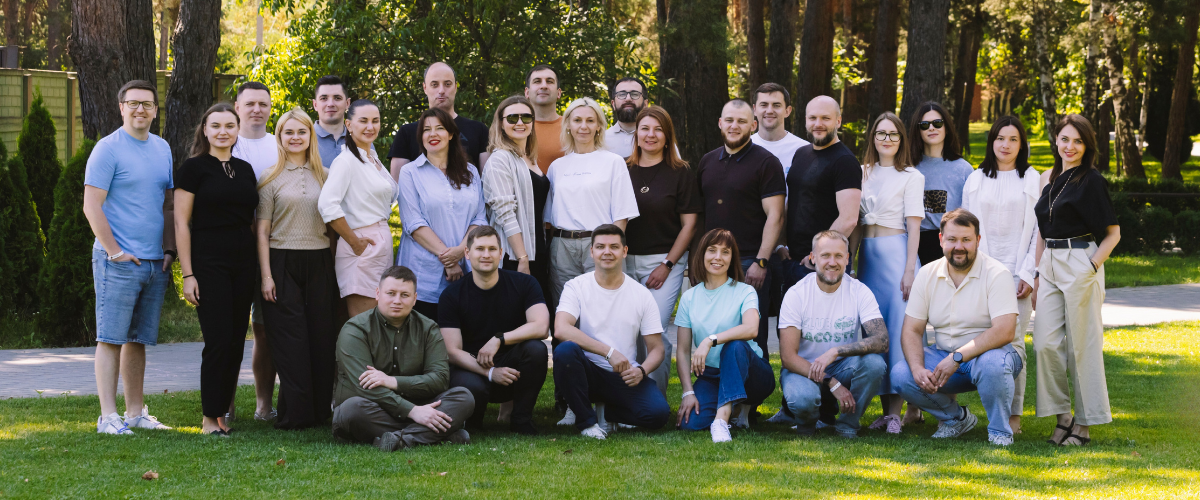
The programme brought together 23 detectives and five prosecutors. Importantly, the group included professionals with diverse levels of experience — from those who have worked within the institutions for many years to colleagues who joined more recently. This multi-perspective composition helps strengthen internal cohesion within teams as the institutions continue to evolve.
“For me, this programme was less about acquiring knowledge and more about professional growth through the exchange of experience with colleagues. Our group brought together professionals with substantial experience in anti-corruption institutions, as well as valuable experience gained before joining them,” says programme participant and SAPO prosecutor Elena Drobotova. “Each module included topics that went beyond criminal proceedings but were highly valuable for legal practitioners. In particular, during Module I, I was deeply impressed by Rasim Babanli’s lecture on common sense, while in Module III, the negotiation exercises and discussions of ethical dilemmas were especially engaging and useful.”
About the Programme’s Trainers and Experts
The programme’s team of trainers and experts was assembled with the specific nature of anti-corruption investigations and the day-to-day challenges faced by NABU detectives and SAPO prosecutors in mind. It brought together practitioners directly involved in criminal proceedings, alongside experts specialising in team development, critical thinking, and professional collaboration.

This approach made it possible to combine procedural, managerial, and behavioural expertise — and to discuss not only “what is legally correct,” but also “how it works in practice.”
The programme team included representatives of judicial institutions at various levels, law enforcement agencies, and experts from fields beyond criminal justice. This inter-institutional and interdisciplinary composition allowed participants to examine the same procedural decisions from different professional perspectives, develop a shared understanding of standards, and place equal emphasis on personal development as an integral part of professional competence.
This multidimensional approach was shaped by a team of trainers and invited experts, including:
- Vira Mykhailenko, judge of the High Anti-Corruption Court;
- Dmytro Mykhailenko, judge of the High Anti-Corruption Court;
- Markiyan Halabala, judge of the High Anti-Corruption Court;
- Tetiana Kryklyva, judge of the High Anti-Corruption Court;
- Viktor Nohachevskyi, judge of the High Anti-Corruption Court;
- Vasylyna Yavorska, Head of JustGroup;
- Kostiantyn Shalota, judge of the Zhytomyr Court of Appeal;
- Iryna Samborska, prosecutor at the Prosecutor General’s Office;
- Viktoria Livochka, prosecutor at the Sviatoshyn District Prosecutor’s Office in Kyiv;
- Yuriy Bielousov, Deputy Director of the Economic Security Bureau of Ukraine;
- Margaryta Sokorenko, Government Agent before the European Court of Human Rights;
- Oleksandra Yanovska, Judge of the Supreme Court;
- Rasim Babanly, First Deputy Head of the Supreme Court Secretariat;
- Iryna Morzhova, certified consultant and analyst;
- Viktoria Mryshuk, facilitator of transformational sessions, organisational coach, business game facilitator
- Den Dubravin, emotional intelligence trainer, practical psychologist;
- Tymur Demchuk, Head of Corporate Programmes at Kyiv-Mohyla Business School, PhD in Political Science, lecturer at the ‘Maybutni’ School of Democracy;
- Vyacheslav Rudnytskyi, CEO at Savvy Learning & Development Solutions, training specialist.

“It is important for me to be part of the ‘Standards of Pre-Trial Investigation’ programme because this area of practice in Ukraine is developing very rapidly. It touches upon some of the most sensitive spheres — human rights, defence, justice, and other areas where intervention by law enforcement agencies is possible. Naturally, when a field evolves so quickly, new legal positions emerge that require reflection and discussion in order to improve both the protection of human rights and the effectiveness of pre-trial investigations,” noted Dmytro Mykhailenko, judge of the Appeals Chamber of the High Anti-Corruption Court.
A particular strength of the programme was the internal expertise contributed by NABU representatives. Through lectures, discussions, and “Detective Workshops,” they shared practical experience in organising investigations, making decisions in complex proceedings, and working under conditions of limited resources.
The following NABU representatives contributed to the programme:
- Denys Hiulmahomedov, First Deputy Director
- Iryna Spichak, Head of the Internal Control Department
- Viktor Yarema, Deputy Head of the Detective Unit
- Vitalii Kabaiev, Senior Detective
- Viktor Malyi, Senior Detective.

“In my view, the sections on project thinking and planning in Module II addressed critically important topics for organising pre-trial investigations and transforming the mindset of NABU detectives working on highly complex cases. In this context, team coordination and a shared understanding of the common goal are essential for the effective investigation of high-level corruption cases. We also saw that many of the ‘blind spots’ relate to time and resource management, as well as the ability to define clear objectives,” emphasised Denys Hiulmahomedov.
Hard Skills: How the Logic of Investigation Is Changing
The hard skills component of the programme focused on developing a shared logic of pre-trial investigation — from the earliest procedural decisions to the completion of proceedings. Participants worked with the key elements of this logic: the division of roles between investigators and prosecutors, prioritisation criteria, investigation planning, and the organisation of work under conditions of limited resources.

Pre-trial investigations were examined through the lens of project management — as a system of decisions involving clear objectives, a coordinated team, constraints, risks, and available resources. Planning was approached not as a formal requirement, but as a process of thinking, coordination, and documenting team agreements that shapes the consistency and manageability of proceedings.
A separate block focused on the standard for a notice of suspicion: what makes it well-grounded, how “suspicion” relates to “indictment,” and whether a notice of suspicion can be concise while remaining clear and persuasive.
Participants also worked extensively with evidentiary standards. They analysed practical situations related to the relevance, admissibility, reliability, and sufficiency of evidence, and discussed the use of circumstantial evidence — how to structure its logic, present it in court, and address cognitive biases that may influence the perception of the evidentiary picture.

Considerable attention was also paid to approaches to preventive measures, including risk assessment, the limits of necessity and proportionality, and the impact such decisions have on the дальнейшу логіку proceedings.
The final session focused on the completion of pre-trial investigations. Participants worked with the standard of a concise indictment and analysed cases involving compliance with — and violations of — the presumption of innocence at the pre-trial stage.
Soft Skills: How Interaction and Thinking Are Changing
At the same time, the programme was not only about procedural decisions, but also about the people responsible for making them. Detectives and prosecutors worked on developing soft skills that directly influence the quality of interaction within criminal proceedings: communication, emotional intelligence, resilience, and the ability to build professional partnerships.
Particular attention was paid to leadership — understood not merely as managing processes, but as the ability to organise teamwork through a shared understanding of goals, priorities, and expected outcomes.

Participants explored what makes a team truly effective: a common purpose, mutual trust, and a culture of collaboration. They reflected on the idea that a team exists only as long as it continues to grow — through reflection, the exchange of experience, and the ability to overcome challenges together.

Together with Vyacheslav Rudnytskyi, participants developed a shared ethical compass by analysing moral dilemmas drawn from professional practice. With Iryna Morzhova and Viktoria Mryshuk, they explored individual and collective courage — the courage to change themselves and transform the environment around them. Together with Tymur Demchuk, they worked on negotiation strategies as a tool for professional interaction, coordination, and reaching shared decisions.
Inter-Module Events: Broadening the Scope of Thinking
Throughout the programme, four inter-module sessions were held, creating space to reflect on the broader context in which the criminal justice system operates and to deepen professional dialogue beyond the core training modules.
Two sessions focused on the topic of Ukrainians’ attitudes towards the state and corruption. Together with Maryna Starodubska, Managing Partner of the consulting company TLFRD and author of How to Understand Ukrainians: A Cross-Cultural Perspective, participants explored why Ukrainians demonstrate different levels of trust in the state, how historical experience, closed social circles, and differences in values shape behaviour, and what influences attitudes towards integrity and corruption across different generations.
A separate session was dedicated to analysing the case study introduced during Module I. Together with Dmytro Mykhailenko, Judge of the Appeals Chamber of the High Anti-Corruption Court, participants worked on issues of legal qualification and discussed different approaches to procedural decision-making in real-life situations.

The concluding inter-module session took the form of a conversation with philosopher Oleksandr Filonenko. Participants reflected on the idea of a person’s inner stance — why one can remain resilient and even happy in difficult circumstances, and, conversely, lose one’s sense of stability despite external well-being. This discussion became an important complement to the programme’s professional dimension.
The Cultural Component: A Pause That Allows Us to Move Forward
The cultural component is one of the defining features of the Standards of Pre-Trial Investigation programme. We intentionally create space for pause — to restore resources, strengthen the connection with ourselves, our culture, and the land on which we live and work.
In previous cohorts, participants explored Kaniv and reflected on the themes of memory and meaning, turning to Trypillian culture as a way of understanding origins and continuity. This time, they discovered the history and cultural depth of the Poltava region.


Participants visited Opishnia — the heart of Ukrainian pottery, where this craft is not only preserved but carefully nurtured and passed on through generations. They explored the estate of Vasyl Krychevsky’s family and worked with clay at the Opishnia Artel — moulding, painting, and immersing themselves in the creative process.
This experience became an important reminder that the development of a legal professional is shaped not only by knowledge and decision-making, but also by the ability to pause, reconnect with oneself, regain a sense of grounding, and restore inner balance.
The development program is being implemented on the initiative of the National Anti-Corruption Bureau of Ukraine. It was developed and is being implemented by the JustLearn development hub of the JustGroup with the support of the “Inclusive Recovery Support for Resilience and Human Security in Ukraine” project, implemented by the UNDP Ukraine and financed by the Government of Japan.
More photos can be found in the album on the JustGroup Facebook page.
Photos: Anna Putylina, Pavlo Malovanyi, Sofia Malovana