Mentorship Program “Path to Excellence”: developing a culture of experience exchange and support within the legal community

During JustLearn development programs, we work with participants on approaches and concepts that require time, effort, and inner openness to integrate into daily practice. We have initiated the Mentorship Program “Path to Excellence” to support them in implementing these approaches and, at the same time, to strengthen a culture of mutual support and experience sharing within the community.
“It was our first and very intense attempt to develop a culture of professional dialogue through mentoring in a system that lacks support, open exchange, and productive horizontal professional relationships. We see the potential of this initiative as a long-term investment in the sustainable transformation of the system — through relationships, trust, and working together on issues that are important here and now,” says Vasylyna Yavorska, CEO of JustGroup.
Thus, during March-June 2025, with the support of the Transformational Recovery for Human Security in Ukraine project, funded by the Government of Japan and implemented by UNDP Ukraine, we implemented the first cycle of the Mentorship Program “Path to Excellence”.

About mentors
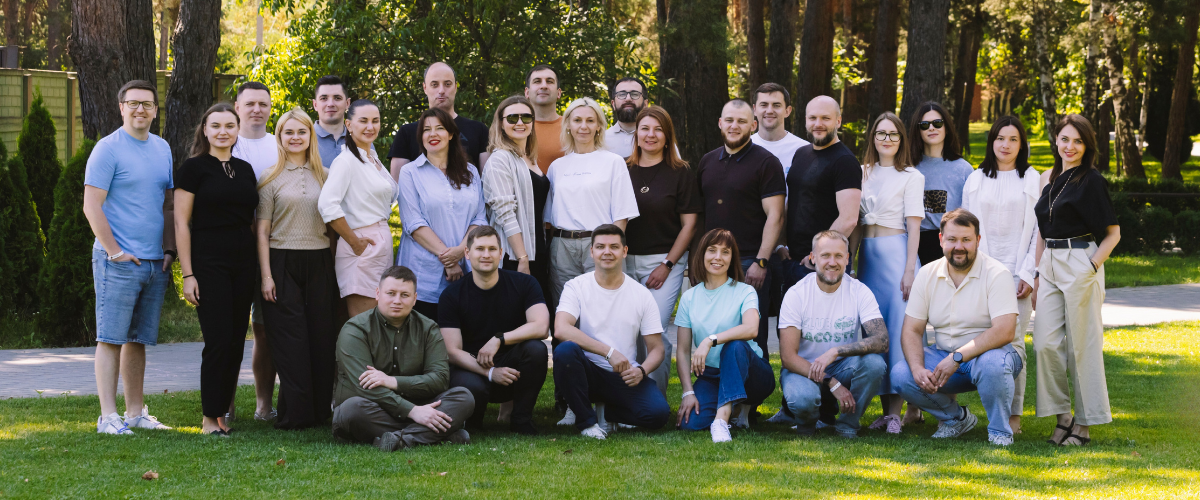
Mentoring is more than knowledge transfer. It is a path of inspiration and mutual growth, where development is the main value. We are grateful to 20 practitioners who agreed to invest their time and become the first mentors of the program. All of them are current JustLearn hub coaches and professionals with relevant expertise who completed a three-day mentoring training in January 2025.
“Traditional approaches to development are often limited to one-day training, the transfer of ready-made solutions that are not adapted to the national context, and their effectiveness is usually measured only by the number of events held. As a result, the employee returns to the familiar environment and established practices, and no changes occur. Mentoring, which is more commonly synonymous with the term “mentoring” in the criminal justice system, is quite different. But a mentor, unlike a mentor, is armed not only with his or her own professional experience but also with an arsenal of methods and techniques for transferring it to less experienced colleagues,” said Yurii Bielousov, Head of the Department of the Prosecutor General’s Office, mentor of the program.
According to all the canons of mentoring, the initiative in interaction belongs to the mentee. At the same time, the mentor has an important role and several responsibilities:
- help the mentee set goals and create an individual development plan
- support in analyzing difficulties and finding solutions
- share experience, knowledge, and stories from practice
- monitor progress and support the mentee’s development throughout the program
- provide regular and constructive feedback

About the mentees
The mentees are graduates of JustLearn development programs of all years and cohorts, including Investigative Interviewing, Criminal Investigation Standards, and a program for managers. They include 28 representatives of the Prosecutor General’s Office, the National Anti-Corruption Bureau of Ukraine, the National Police, the Security Service of Ukraine, and the Ministry of Justice of Ukraine.
The mentees, for their part, not only initiated cooperation with their mentors but also actively formulated their own goals and expectations from the mentoring process, identified areas for professional development, and took responsibility for their learning. The mentees’ main responsibilities included regular preparation for meetings, adherence to agreements, openness to feedback, and willingness to work on themselves. This approach allowed them to build a partnership with their mentors based on trust, openness, and mutual respect.
About cooperation
Among the priority areas on which the 28 mentoring pairs focused their work were improving the effectiveness of teamwork, enhancing the quality of criminal investigations, and ensuring compliance with ethical and professional standards, particularly during interviews. The participants shared the results of this interaction during a final meeting at the end of June.

For example, Denys Hiulmagomedov (NABU) and Oleh Lozovyi (National Police) developed the concept of “Effective Anti-Corruption Management” — a modern integrity management system that has already been implemented on the Integrity Police platform. The pair of Yurii Bielousov (PGO) and Tymur Koval (SBU) worked on strengthening the motivation and involvement of investigators in professional development. Oksana Kaidanovich (Zhytomyr Prosecutor’s Office) and Alina Hutnyk (Kalush District Police) focused on establishing psychological contact with children during investigative interviews. Their collaboration resulted in the publication of an article on the JustTalk platform dedicated to children as participants in armed conflict.

The basis for effective and comfortable interaction between a mentee and a mentor is a well-formulated request: when it is interesting and important to the mentee, and the mentor has the necessary knowledge and desire to share it. This is how it worked out in the team of Stanislav Petrenko, head of the Unit, The PGO War Department, and Yevgeniya Murzo, investigator of the Department for the Investigation of Crimes Committed in Armed Conflict, The Main Department of National Police of the city of Kyiv. They worked on improving the argumentation of legal positions.

“Our mentoring pair managed to plan a specific route consisting of several interrelated topics that reinforced each other and allowed us to move smoothly from one to another. Thus, starting with the specifics of applying judicial practice, we moved on to tasks related to drafting procedural documents and then focused on arguing a legal position. Mentoring is largely about the process, not a predetermined outcome. Therefore, it is not so much the result of the task that is important, but rather the thought process that leads to it,” emphasized Stanislav.
“For me, this mentoring program was an opportunity to systematically work through the topics I deal with every day as an investigator. The most valuable thing was that we worked on real cases, which allowed us to build a more confident and well-founded procedural position. This collaboration gave me confidence in my own decisions and helped me develop a systematic approach to preparing procedural documents,” shared Yevheniia.
Mentoring support, alongside development programs, makes JustLearn a more holistic space for the development and integration of change. This experience has shown us that support and experience sharing work best when there is trust and shared goals. That is why we will continue to develop our mentoring program — together with those who are ready to grow and support others.
Photo: Serhii Handusenko, Anna Putylina