Growing Together: How Trainers and Experts Are Shaping the Future of JustLearn
For more than five years, JustLearn has been developing professional learning programmes for practitioners across the criminal justice system. Over this time, we have adapted and scaled training formats, built teams of trainers, and explored approaches that help turn learning into meaningful changes in professional practice.
From the outset, JustLearn has focused on creating a space where people gain knowledge and skills, learn from one another, and engage with new approaches and professional standards. Over the years, we have accumulated substantial experience, gained a clearer understanding of what works in practice, and explored the demand for this kind of professional development within the criminal justice system.
Today, JustLearn has reached a natural point of reflection. We already have a strong foundation of experience and now want to move forward in a more systematic and structured way. Organising what we have learned and building a clearer framework for our work will be central to the hub’s next stage of development.
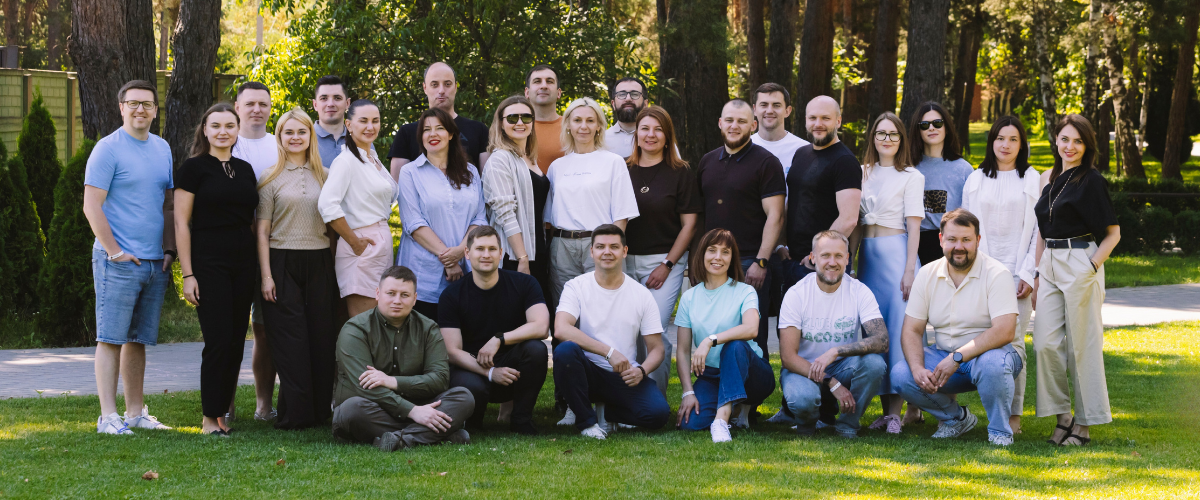
An important part of this work is building and strengthening teams of trainers and experts. Today, around 50 trainers and experts contribute to JustLearn programmes, many of them practitioners from across Ukraine’s criminal justice system. JustLearn draws heavily on the expertise that already exists within the system. Our task is to identify that expertise, structure it, and translate it into learning products that can be tested, refined, and piloted through JustLearn.
To reflect on these next steps together, we brought JustLearn trainers and experts together for a three-day camp. We worked in two main areas: strengthening trainers’ capacity to facilitate adult learning and development, and jointly shaping a vision for the future of JustLearn.
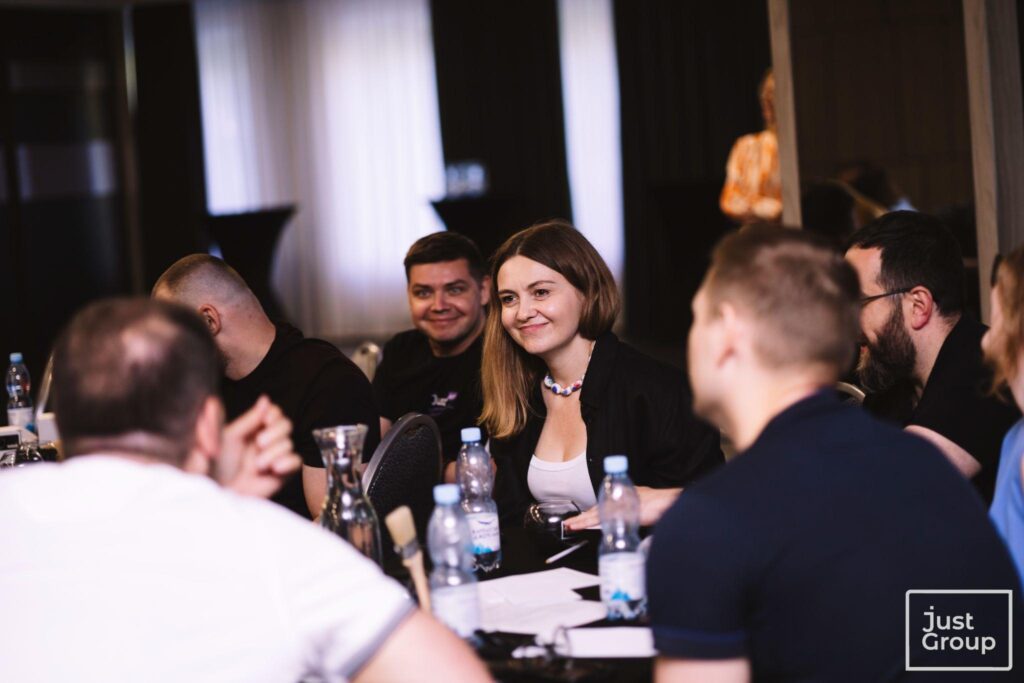
“One of our priorities is to expand the JustLearn team of trainers and experts by drawing on the expertise of practitioners within the criminal justice system. We believe that engaging practitioners directly is essential to creating relevant and effective development programmes. At the same time, we see great value in combining the experience of professionals working within the system with the perspectives of invited external experts,” said Vasylyna Yavorska, Head of JustGroup.
Over the two days, we worked with experts who helped us examine the roles of a trainer, adult learning, and community development from different perspectives.
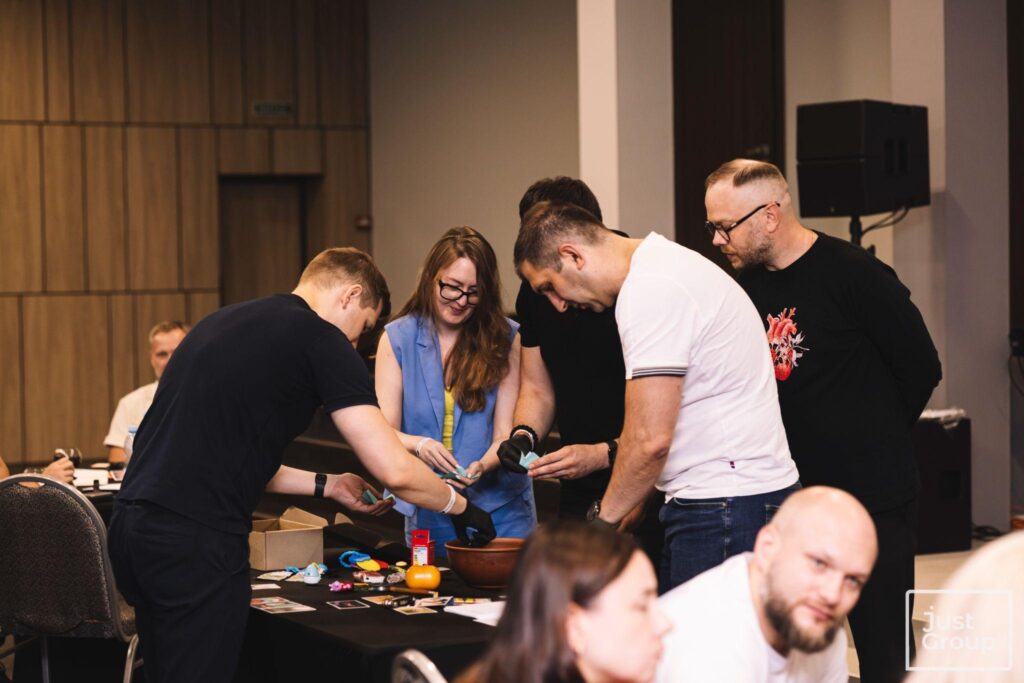
Together with practical psychologist and emotional intelligence trainer Den Dubravin, we reflected on what kind of trainer we want to be: one who is constantly fighting “weeds”, or one who creates the conditions for something new to grow. Participants identified what they wanted to cultivate in themselves over the coming year and symbolically planted those intentions together with seeds — a reminder that growth takes time, attention, and the right environment.
With mentor and transformational session facilitator Viktoriia Mryshuk, we explored mastermind groups as a tool for peer learning and mutual support. In this format, participants work through professional challenges together, generate new insights and solutions, help one another adapt them to real-life contexts, and draw on the collective experience of the group.
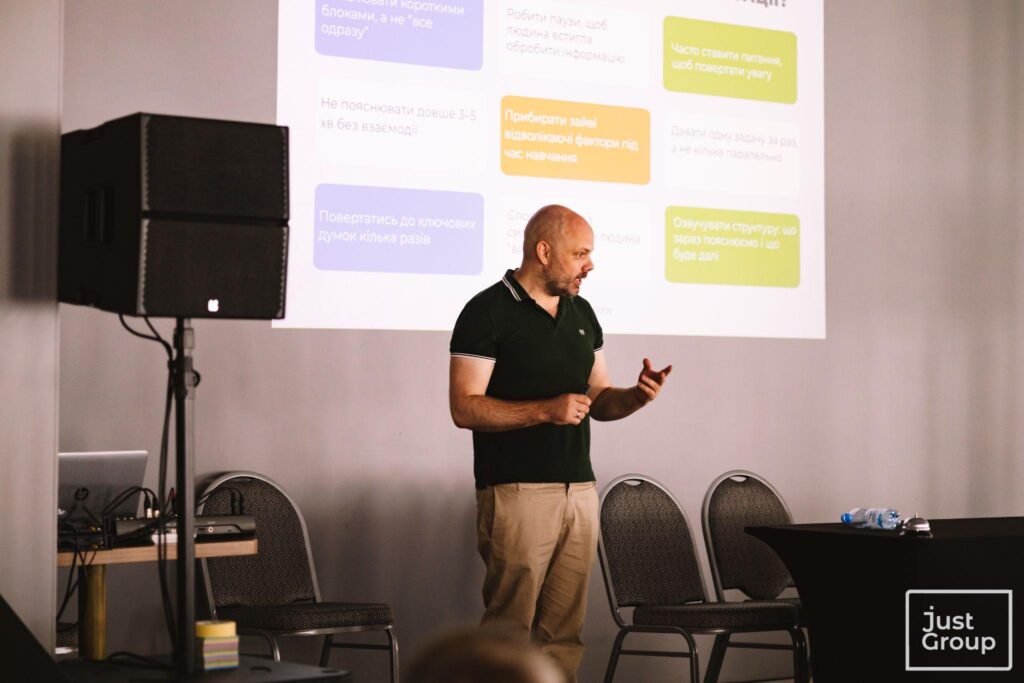
During a masterclass with Viacheslav Rudnytskyi, CEO of Savvy Learning & Development Solutions and a learning and development specialist, trainers deepened their understanding of how adults learn and what helps turn an individual training session into a meaningful developmental experience.

Strengthening our trainer teams is directly connected to another strategic priority: gradually embedding selected programmes and approaches within the institutions themselves. We want the expertise and standards currently developed through JustLearn to take root within institutions and become sustainable practices that can be maintained and reproduced over time.
Investigative Interviewing is one example. This type of training should gradually become integrated into the learning systems of the National Police of Ukraine, the National Anti-Corruption Bureau of Ukraine, the Economic Security Bureau of Ukraine, and other pre-trial investigation bodies. This requires institutions to develop their own trainer teams and internal expertise capable of sustaining these practices and standards over the long term.
During a facilitated session with strategic consultant and founder of sPIN consulting Iryna Morzhova, we brought these strands together in a shared conversation about the future of JustLearn: what is already working in developing agents of change, what needs to be strengthened, and what our next steps should be.
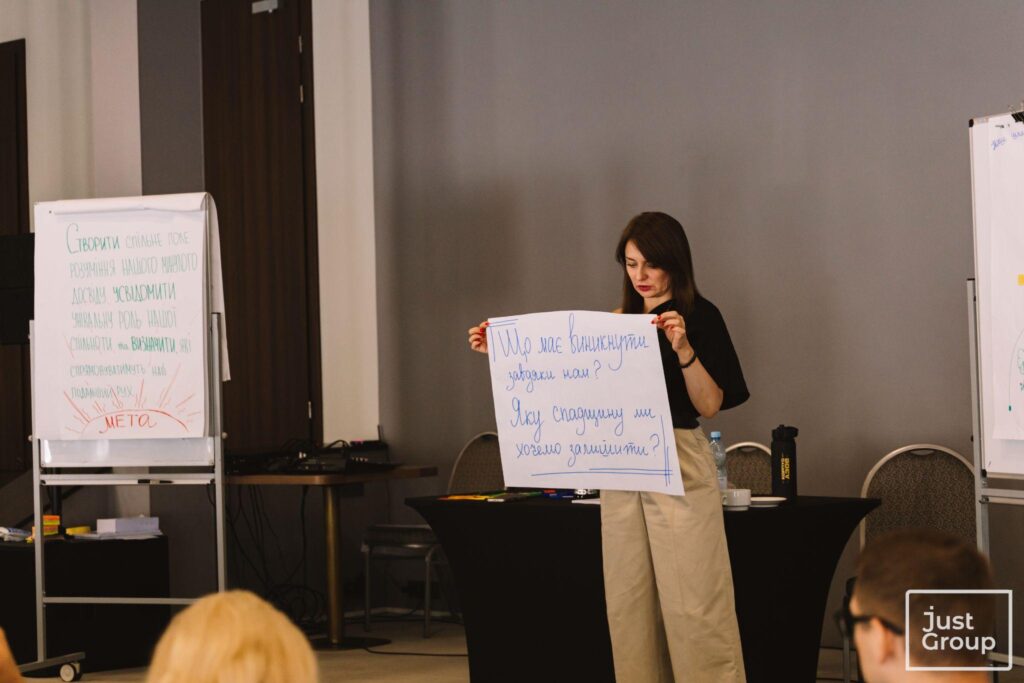

The camp created a space where trainers could strengthen their own practice while helping shape the future direction of JustLearn.
We are grateful to the Norwegian Centre for Human Rights at the University of Oslo for supporting us on this journey.
Photo: Maryna Konovalenko